
Newsletter as PDF
Contact
EMB - European Milk Board asbl
Rue de la Loi 155
B-1040 Bruxelles
Tel.: +32 - 2808 - 1935
Fax: +32 - 2808 - 8265
Dear dairy farmers, dear interested parties,

Another eventful year is drawing to a close. Together with the European Milk Board, dairy farmers across Europe have engaged in countless activities, defending the interests of dairy producers, drawing attention to our political demands and presenting our proposals for sustainable farming conditions.
We at EMB wish to take this opportunity to thank all milk producers for their commitment and steadfast work in 2022! We would also like to thank consumers who have supported farmers, among others by purchasing Fair Milk products, and policy-makers who have advocated for a sustainable agricultural sector!
Alongside new contributions, the last edition of our newsletter in 2022 contains a selection of articles published over the past twelve months as we would like to take stock of key events at this time of year. In 2022, too, farmers have produced high-quality food day in day out, while at the same time defending their profession, engaging in political work and fighting for the survival of their farms and families' livelihoods. While the atrocious war in Ukraine has caused higher farm-gate prices in some countries, it has also driven up production costs, which is why the fight for stable and fair remuneration of dairy farmers continues.
We look forward to moving further down this important path in the coming year with you, toward a stable dairy sector in Europe. But now, it is time to enjoy a well-deserved break and get some good rest to gear up for another year of strong political work.
Merry Christmas and a happy and healthy year 2023!
Warm regards,
Your EMB colleagues
Kjartan Poulsen elected as new EMB Chair by European dairy producers
-
- © EMB
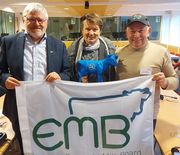
Brussels: The European Milk Board (EMB) will now be headed by its new Chair, Danish milk producer Kjartan Poulsen. At the EMB’s recent General Assembly, German BDM representative Elmar Hannen was also elected Deputy Chair. The previous Executive Committee members Boris Gondouin from APLI (France), Belgian MIG representative Guy Francq, his Irish colleague Pat McCormack from the ICMSA and Roberto Cavaliere from the APL (Italy) were re-elected to the Executive Committee.
read moreNo more sacred cows!
-
- © EMB
Despite recent dairy price increases, a capricious system governed by speculators and unpredictable market swings remains unchanged. To guarantee food safety and security, as well as a fair income for farmers, the Fair Milk alternative should become the norm.
A lot is made of the pernicious effect of the Russian war against Ukraine on dairy prices in Europe. However, the current bout of inflation had already started rearing its head in the fourth quarter of 2021. Actual shortages resulting from the conflict can only partly account for the rise in costs rippling through global supply chains. Speculators are largely responsible for the situation on the market since their activities adversely affect producers as well as consumers. While higher food prices may be hard to stomach for consumers in the North, in the global South, their activities, siphoning off money to a handful of traders and companies, wreak havoc on populations who are already experiencing food insecurity.
Mirror clauses
At the macro-economic scale, it is governments’ laissez-faire trade policies, leaving the supply of vital commodities to markets, that have led us down the current path. In pursuit of shareholder dividends, European producers have been substituted by ever cheaper produce. While dairy farmers in the EU must meet stringent standards, global players rarely comply with the same food safety, social, and environmental standards. There is simply too little control over the quality of imports and production methods as regards animal welfare or the carbon footprint. When it comes to tackling ecological concerns, like excessive nitrogen or methane emissions, measures cannot be simply imposed on farmers unilaterally without consulting them, especially if these additional constraints are not reflected in farm-gate prices. As long as this will be the case, mirror clauses should be enforced so that European farmers are not undercut by products that do not meet the same stringent social, ecological and quality standards – something the EMB has been calling for persistently.
"We can’t afford to feed you anymore"
Unable to compete on price, Europe’s farmers are throwing in the towel at an unprecedented rate. Between 2003 and 2016, the number of farms in the EU-27 decreased from about 15 to 10 million (-32%). The smallest farms (<5 ha) are seeing the largest decrease (-38%). I remember a banner put up by dairy farmers from Northern Ireland at one of our demonstrations in Brussels, which read: "We can't afford to feed you anymore." The EU has become so dependent on global players that the slightest hiccup, or indeed an acutely inflamed appendix such as the Russian invasion of Ukraine, means a trip to the ER.
Dr. Karin Jürgens from the Rural Sociology and Agriculture Studies Office (BAL) conducted a study on margins, and several more on the cost situation of dairy farmers, which has systematically worsened over the last decades. Small dairy farms are the worst hit. Even those who are doing well are unable to obtain funding to make the necessary investments, for example, to help them keep up with increasingly stringent regulations. They are told that their farm lacks scale. Banks turn their noses up at them, saying: “Your farm is no longer future-proof.”
Across the global South, as land falls fallow, dairy cows are being slaughtered, and livelihoods destroyed. Threatened by famine, people would rather opt for a perilous journey north, where they are headed for an uncertain future, than face certain death at home. On the way, they risk falling prey to smugglers, having their mere existence considered a nuisance.
A higher standard
Slowly but surely, concern about dairy farmer attrition is growing among policy-makers. Today, food security is on the agenda like never before. So far, however, barely any concrete measures – if any at all - have been considered to remedy the situation, especially because farmers are not given a say in the policy discussions on this problem. We propose that Fair Milk become the standard. DG AGRI would do well to replicate the Fair Milk approach and apply it to the whole of the EU. Farmers elsewhere could also benefit from this, as the FaireFaso label in Burkina Faso and a similar initiative in Mali have shown.
Market Responsibility Programme
Since the 1950s, Canada has had a system in place that coordinates supply and demand so that stable prices can be set for consumers and farmers. In a tripartite approach, involving the government, the industry and farmers on an equal footing, they agree on a just price for milk. In the Netherlands, this is called the ‘three-legged stool’ approach, referring to the ones farmers used to sit on to milk their cows. Such a system is possible, provided markets are no longer regarded as a sacred cow.
The Market Responsibility Programme (MRP) proposed by the EMB to counter overproduction crises uses a cost calculation developed by Dr. Karin Jürgens as a starting point, ensuring that a certain price range is maintained. Whenever the actual price would leave this range, some aspects of the MRP, such as a voluntary reduction scheme, would be activated to ensure the price returns to the stable corridor.
Think global, trade local
Agriculture is too vital a sector to be left to speculators whose interests simply do not align with those of dairy farmers or consumers. In fact, agriculture should be taken out of the global free trade framework of the World Trade Organisation. At the end of the day, policy-makers have a simple choice to make and they should be clear and honest about it: we can have sustainable agricultural production, or we can have global markets where only the cheapest products are considered competitive; a race to the bottom where all but a handful of people lose. We cannot have both. Decades of mismanagement cannot be fixed overnight, but it is important to start the process as quickly as possible. Now would be a good time.
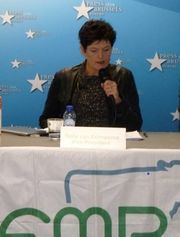
After many years of highly dedicated work for the EMB, Sieta van Keimpema will be leaving the EMB Executive Committee. She has been fighting for Europe's dairy farmers with much energy and effort. We deeply thank her for the exceptional work she has carried out for EMB farmers as member of the Executive Committee and as President.
Sieta van Keimpema, EMB Executive Committee 2006-2022 / EMB President 2020-2022
Milk production has lost over a quarter of its farms in a decade
-
- © Coordination rurale
The agricultural census conducted by the French Ministry of Agriculture every ten years gives us an overview of the French farming landscape and the trends inherent to ten-yearly developments across the country. Its latest publication on 10 December 2021 shows a 21% fall in the number of farms across all types of production.
read moreWhat are the start-up costs for young farmers in Denmark?
-
- © LDM
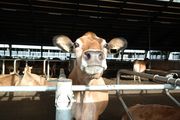
The job of a dairy farmer is multifaceted and demanding, and – as old hands in the business never tire of saying – can be very fulfilling. Yet anyone wanting to start producing milk faces huge challenges in every EU member state. Besides the intense price pressure and low or sometimes inexistent income for farmers and family members helping on the farm – a challenge every milk producer is confronted with – young farmers in particular also have to deal with the investment capital required.
read moreFair Milk in Belgium: quality in harmony with fair production and marketing
-
- © Fairebel, Antoine Melis
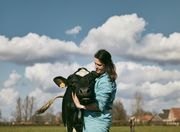
East Belgium: In recent years, the Fairebel label has become synonymous with fair agricultural products of the highest quality. What began as a reaction to the milk crisis in 2009, developed into a real success story. “At a time when farmers feared for their livelihoods due to rock-bottom milk prices, they received no solutions from policy-makers and decided that it was time to take things into their own hands”, remembers Faircoop President, Erwin Schöpges.
read moreRising costs put pressure on milk production
-
- © Deborah Cordwell, wikimedia
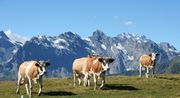
Skyrocketing energy prices are leading to far-reaching consequences. For many months now, milk products have become steadily more expensive around the world. This could be because many food corporations are capitalising on the situation and are using the excuse of rising energy prices to expand their margins. At the same time, milk production worldwide is either stagnating or decreasing. Rising costs and milk prices that do not cover these costs are leading to more farms going out of business and a reduction in production volumes. Since the phase-out of quotas in 2009, the number of dairy farms in Switzerland has reduced by one third. Today, only about 18,000 remain.
read moreMake your own yoghurt, quark and Ziger cheese from Fair Milk
-
- © Di fair Milch, Säuliamt
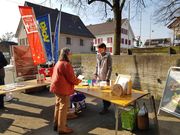
Through our cooperative "Faire Milch Säuliamt", we sell two types of pasteurised milk in the eleven branches of the VOLG chain of stores. Unfortunately, it is not possible for us to sell more dairy products via this channel.
read more"A dramatic collapse"
-
- © EMB
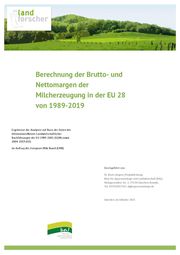
A current study reveals the development in margins for EU milk producers and the fact that they have decreased significantly over the last 30 years, even sliding into negative figures to a large extent.
The study by the BAL (Büro für Agrarsoziologie und Landwirtschaft, Rural Sociology and Agriculture Studies Office) has calculated four types of margin for the EU for the period 1989-2019 respectively 2004-2019 with the gross and net margin and the net economic margin I and II, clearly indicating the development in dairy farming.
France: dairy farmers unite in fairness and solidarity
-
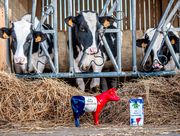
- © FaireFrance
It would be difficult to find a dairy farmer who was left unscathed by the milk crisis of 2009. Rozenn Angenard, dairy farmer in the Ille-et-Vilaine department in Brittany, as well as Isabelle Rouyer and Cédric Dumaine, from the Orne department in Normandy, remember this period where they poured away their milk to protest the rock-bottom milk prices.
read moreQuality comes at a price
-
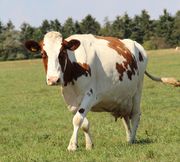
- © AbL, Ottmar Ilchmann
Some associations and companies keep trying to capitalise on market uncertainties to chip away at long-standing quality standards for agricultural products. The German small farmers’ association AbL calls for decent producer prices in the face of higher costs.
read moreFair Milk: a true sign of solidarity
-
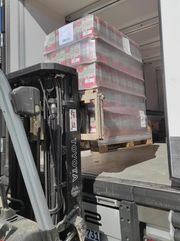
- © Fairebel
With the Fair Milk project, producers do not just advocate for their profession, they also take action to help people in need. As this project belongs to dairy farmers and is managed by them alone, they can react quickly and make their small contribution through Fair Milk.
Please read on for reports from different Fair Milk countries about their concrete action during crises.
Fair Milk in Germany: the Ströbele family from Ehingen
-
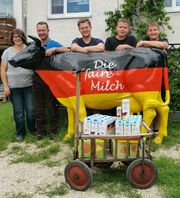
- © Andrea Münnekehoff, Die faire Milch
Our Fair Milk programme members introduce themselves: the Ströbele family from Ehingen in Baden-Württemberg has farmed for over 200 years. Together with his wife and his three sons Lukas, Felix and Fabian, Gernot Ströbele runs his farm with 65 dairy cows and young cattle.
read moreOpen letter by European farmers to the European Union
-

- © ECVC und EMB
We – the European farmers of ECVC and the European Milk Board who, as agricultural producers, are at the heart of food production – regard the current state of EU production systems with great concern. Unless action is taken immediately, it will no longer be possible to guarantee food security in the EU, i.e. the supply of key foodstuffs.
read moreFair, Fairer, Faironika
-
- © EMB
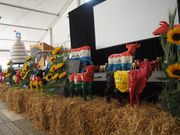
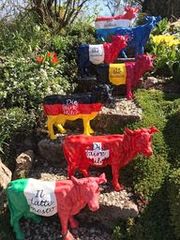
During the milk strike or while spraying the European Parliament in Brussels with milk, on World Milk Day alongside Manneken Pis or at the innumerable Fair Milk tastings in or outside supermarkets, at Europe-wide protests, agricultural fairs and press conferences or in many, many fields at the heart of Europe: Faironika, the EMB’s symbolic cow in different national colours has stood with farmers for 15 years and embodies their call for fair milk prices.
read moreLithuanian CAP Strategic Plan
-
- © LPGA
In Lithuania, farmers are disappointed at the way in which the Lithuanian CAP Strategic Plan was prepared. The Lithuanian Ministry of Agriculture worked on the Strategic Plan behind closed doors, excluding farmers from the process and not taking their input into account. As a result, dairy farmers are not happy with the outcome of the Lithuanian Strategic Plan.
read moreThe interplay between climate change and pasture grazing
-
- © Vanessa Langer
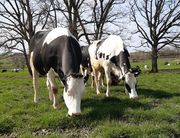
We farmers are committed to climate protection because we are directly affected by the fallout of climate change. There are many different ways to mitigate climate change. When looking at greenhouse gas reduction in dairy farming, case-by-case evaluation is essential as carbon emissions strongly depend on the location, structure and type of farm and use. Dairy farming is not per se a climate killer as is often claimed.
read moreFair Milk in 2022: buying local is still worth every pennyFair Milk in 2022: buying local is still worth every penny
-
- © EMB
We asked our Fair Milk producers to look back on 2022 and to give us their forecast for the coming year. Assessments differ from country to country, but all agree that Fair Milk is still necessary.
read moreLegal notice
European Milk Board asbl
Rue de la Loi 155
B-1040 Bruxelles
Tel: +32 2808 1935
Fax: +32 2808 8265
E-Mail: office@europeanmilkboard.org
Website: http://www.europeanmilkboard.org