
Newsletter as PDF
Contact
EMB - European Milk Board asbl
Rue de la Loi 155
B-1040 Bruxelles
Tel.: +32 - 2808 - 1935
Fax: +32 - 2808 - 8265
Dear dairy farmers, dear interested parties,

As 2023 draws to a close, we look back on a year marked by challenges in the European dairy sector by presenting you articles from many countries that were published throughout the year. Reflecting on the diverse experiences across Europe, it becomes evident that our shared pursuit for a sustainable and fair dairy sector remains more relevant than ever.
This year, decreasing milk prices, high production costs and regulatory changes have continued to pose significant challenges. From Belgium to Lithuania and elsewhere, dairy farmers have struggled. Especially the situation in Lithuania, with its rapidly declining milk prices and shrinking dairy sector, serves as a strong reminder of the fragility of our profession.
Amidst these challenges, the push for sustainability and environmental responsibility has been a defining theme. The European Green Deal and the “Farm to Fork” strategy have set ambitious targets, but have not come with the necessary market regulation. So, we have been demanding the framework that is necessary to adapt to the Green Deal and to stabilise our agricultural system and will continue to do so.
This year also highlighted the importance of farmers’ autonomy and fair brands. The concept of Fair Milk continues to show in Belgium, France, Germany, Luxemburg and Switzerland how empowering farmers can lead to more equitable and sustainable practices. It is a model that resonates with the ethos of many dairy producers across Europe.
We have also seen the impact of large retailers and the consolidation of the dairy processing industry, particularly in Switzerland. The increasing power of major retailers like Migros has raised concerns about market concentration and the survival of smaller processors, echoing the need for fair competition in the sector.
In Germany, discussions and actions surrounding agricultural policy, contracts, market transparency and price monitoring have been at the forefront. These efforts are crucial in ensuring that dairy farmers receive fair compensation for their products.
Sweden's dairy farmers have set a good example of resilience and a proactive approach, tackling issues like competitiveness and economic pressures head-on, while in Denmark, concerns over cattle exports and the use of organic milk by processors have sparked major discussions.
As we approach the new year, it is becoming clear that the path ahead is fraught with challenges but also ripe with opportunities. Europe will elect a new Parliament in 2024. The EMB will use this as an opportunity to push for a better system by cooperating with like-minded partners, to meet EU politicians and promote good concepts, such as EU legislation that makes cost-covering prices mandatory.
The need for collective action, innovative solutions and strong advocacy has never been greater. Let us continue to strive for a dairy sector that is fair, sustainable and resilient, ensuring a future for dairy farmers across Europe.
Wishing you all a peaceful festive season and a prosperous New Year.
Your colleagues at the European Milk Board

European Green Deal in Luxembourg
-
- © Georges and Tina Hemmer-Mack
In December 2019, the European Commission published a communication about the European Green Deal. The goal of this instrument is to bring about a transition towards a modern, resource-efficient, and competitive economy.
Read more....Fairebel - the Belgian Fair Milk in pictures
-
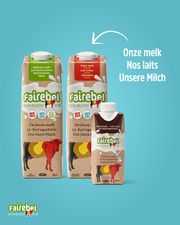
- © Fairebel
Come join us on a picture journey with Fairebel and meet the people – farmers, Fairebel supporters and consumers – who make fair milk possible in Belgium.
See more....Lithuania at a critical junction
-
- © LPGA
The situation in the Lithuanian milk sector has turned critical overnight. Over the past nine months, the price of raw milk has rapidly declined. Concurrently, the number of dairy farmers, as well as the overall number of dairy cows, is decreasing as well. Between the first quarter of 2022 and 2023, the number of dairy cows dropped by over 4000 cows, which is a 2% decrease. Unsurprisingly, milk production has also decreased, by 3,6% over the same period.
Read more...Five-year anniversary of Di Fair Milk Säuliamt in Switzerland
-
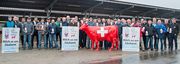
- © Di Fair Milch Säuliamt
The anniversary of the Di Fair Milch Säuliamt regional project was an occasion for many media outlets to report on it. Everyone was impressed by our performance figures. “Why does this project not exist for Switzerland as a whole?”, that is a question that came up again and again.
Read more...When mass retail acts with impunity!
-
- © Uniterre
Mass retail has totally disrupted the dairy market, which was already on knife’s edge, by buying out multiple processing companies.
Read more...Representatives from 14 European countries call for an end to political ignorance in the EU
-
- © EMB
With 18 organisations from 14 countries, the EMB’s first Members' Assembly this year in Brussels attracted a strong turnout. The discussions among the member organisations were further enriched by exchanges with guest speakers from the retail sector and from the organisation European Coordination Via Campesina (ECVC). During the two days of the assembly held at the end of June, the situation on the international dairy market was analysed and constructive projects, ideas and possible cooperation initiatives were discussed.
Read more...2023, the year of customer canvassing for Faireswiss
-
- © Faireswiss
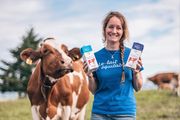
In Switzerland, the Faireswiss range of products finds it difficult to make its way into mass retail. That is why the cooperative has decided to reduce its communication budget and to concentrate on customer canvassing. To this aim, the Faireswiss board has decided to employ someone part-time to canvas food stores, restaurants and other facilities that prepare a large number of meals like residences for persons with disabilities, schools, hospitals etc.
Read more...Temporary discounts are not a solution
-
- © EMB
Prices are sinking again and it is often surprising how quickly things can change, especially when it comes to supermarkets. For example, let’s look at butter: a well-known supermarket chain is attempting to attract customers with their rock-bottom bargain price of 1.59 euros for a pack of butter. Competitors are also following this trend: 1.49 euros as of today. Retail chains permanently rely on price reductions for milk products when it comes to advertising. The price for butter at the end of last year was almost a euro higher. This doesn’t just happen by chance. It calls for a thorough analysis and understanding of such price fluctuations as well as a careful monitoring of the market and an evaluation of the underlying factors.
Read more...D’fair Mëllech in Luxembourg: safeguarding fair prices for dairy farmers and consumers
-
- © D’fair Mëllech
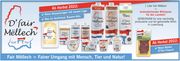
Forty-eight dairy farmers in Luxembourg came together in 2011 to found Fairkoperativ (FKL) and to create their own brand called D’fair Mëllech. The regular (inadequate) milk price is topped up to reach a fair milk price that would allow dairy farmers to make a decent living.
Future of dairy farming in Germany: challenges and opportunities in focus at Berlin conference
-
- © BDM
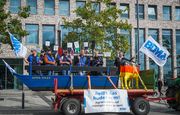
The conference organised by the Federal Ministry for Food and Agriculture on 31 August in Berlin concluded with the first indications from the ministry in favour of strengthening dairy farming. The BDM engaged actively in discussions with representatives from the dairy industry, research, NGOs, trade and with farmers themselves. We also expressed our criticism of agricultural policy to date with an action in front of the conference venue, and presented our expectations of this conference by publishing an eight-point position paper.
Read more...Die faire Milch in Germany: after a three-year break, we were finally back at the International Green Week in Berlin
-
- © Andrea Münnekehoff, Die faire Milch
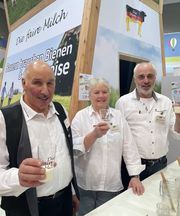
The figures speak for themselves: 1,400 exhibitors from 60 countries and about 300,000 visitors – that was the International Green Week 2023 in Berlin. Die faire Milch was also back with a stand in the North Rhine-Westphalia Hall. The network held together through the Covid-19 pandemic and kept in touch regularly. That is why we were looking forward to seeing each other and it was a joy to finally be back together in Berlin.
Sweden's dairy industry; protests, pressures, and policies
-
- © Sveriges Mjölkbönder
Sweden's dairy farmers have been making waves in recent months, tackling head-on the pressing issues facing their industry. The nation’s food chain has come under the scrutinizing gaze of Swedish authorities, eliciting our active participation to help shed light on the challenges we are facing.
Read more....FaireFrance: Faironika tours France!
-
- © FaireFrance
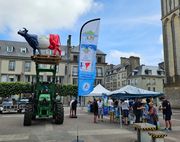
Since 2013, the FaireFrance brand has been selling dairy products at a fair price that permits producers to live off their work. A holistic concept that makes it possible to preserve family farms, cultural landscapes and local know-how. The brand celebrates its ten-year anniversary this year, with the support of French consumers that translates in strong sales growth.
Read more...Persisting controversy over Danish cattle exports to Russia
-
- © Vanessa Langer
A few months ago, Danish daily Avisen Danmark ignited controversy with a report suggesting that despite the apparent cessation of cattle exports to Russia, Danish cows might still be reaching Russian soil, albeit through a detour via Hungary. To this day, the suspicions persist.
Read more...8th European Fair Milk Conference celebrates the commitment of farmers and honours contributions to social sustainability
-
- © EMB
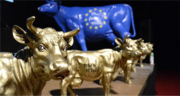
Something that should be commonplace in the dairy market has in fact become a rare sensation: for a few years now, Fair Milk has made it possible for farmers to earn a decent living. This brand founded in 2006 in Austria now puts socially sustainable products on supermarket shelves for consumers. At the Fair Milk Conference held in France, FaireFrance was joined by other Fair Milk projects and the European Milk Board asbl (EMB) to celebrate the progress of this important brand founded by farmers.
Read more...Spanish law: paying above the cost of production
-
- © Pixabay: Peggy_Marco
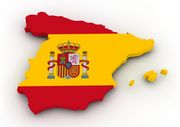
In 2021, Spanish law makers introduced a novelty to stop the destruction of value in the food chain. The Spanish agricultural organisation COAG (Coordinadora de Organizaciones de Agricultores y Ganaderos) gives us an overview.
Read more...A call for sustainable changes in the European dairy sector
-
- © EMB
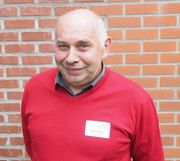
Since the EMB was founded fifteen years ago, we have been struggling – sometimes more, sometimes less successfully – to generate a revenue that would allow us and our families a decent life. 2022 was a better year – despite the fact that our production costs sky-rocketed. In Belgium, we had farm-gate prices of almost 60 cents per litre. Why is it then that over four months, this price paid to producers has fallen by 30% and is now at 36 cents per litre? While it is true that our price is closely linked to butter and milk powder exports, they have reduced by only 10% (4,564 euros/t for butter, 3,375 euros/t for milk powder). Something doesn’t add up.
Read more...EMB held a debate about agricultural sector with ECVC and MEP Biteau - market regulation so that the Green Deal does not exist in a vacuum
-
- © EMB
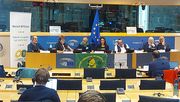
Fair prices and a stable situation for producers are preconditions for the successful implementation of the Green Deal. This means that it is necessary to equip the market with instruments that would stop and reverse the current destabilising trend and would create a functioning framework for the Green Deal, which has, until now, existed in a vacuum.
Together with the European Coordination Via Campesina (ECVC) and Member of the European Parliament Benoît Biteau from The Greens/EFA, an event was organised in the European Parliament to provide some important input to the debate on the requirements for a realistic Green Deal. Representatives from different political groups came together with producer representatives from the EMB and the ECVC, as well as representatives from civil society organisations Humundi and the European Environmental Bureau, to discuss the possibilities to stabilise the EU agricultural system and to make it socially as well as environmentally future-proof.
To provide some context for the discussion on how market regulation can be a win-win for farmers and the goals of the Green Deal, the EMB and the ECVC provided information about the current state of play in the agricultural sector. The EMB provided an overview of the decreasing prices that have been significantly affecting the dairy market once again since early 2023 and are putting farmers under tremendous pressure. As EMB President Kjartan Poulsen reports, they did not focus on the current situation alone: “We also showed how the market has evolved since the end of milk quotas in 2015.” Since then, the increase in volume and the lack of appropriate crisis instruments have exacerbated producer price dips and constant uncertainty, making it practically impossible for young farmers to enter milk production.
Is it possible to find common solutions that would help this sector that is constantly in crisis and address the challenges of the Green Deal at the same time? “We think this is possible if fair, cost-covering agriculture is set as a serious political priority and if the appropriate instruments to achieve it are also put in place”, says Poulsen, explaining the prerequisites to EU policy-makers. EMB Vice-President Elmar Hannen adds: “We have presented a range of possibilities: From the Market Responsibility Programme or the voluntary production reduction scheme that automatically kicks in during crises, to EU legislation that makes cost-covering prices obligatory, as well as to contractual conditions that would lift producers from their weak market position to an equal footing with processors - there are many good concepts and instruments. They are simply waiting to be implemented at EU level, in order to truly equip the agricultural sector for the Green Deal.”
Together with their colleagues from the ECVC, it is important for EMB representatives to ensure that there is a better understanding of the need for stable, socially-sustainable producer structures as the foundation for an environmentally-sustainable agricultural system as well as robust food sovereignty in the EU.
MEPs and representatives from civil society organisations provided constructive contributions as they took the floor in the discussion following the presentations by the ECVC and the EMB. They included:
Benoît Biteau – MEP, Greens/EFA
“We must change the rules, we must draw up new rules of the game.”
Peter Jahr – MEP, EPP
“In the past, politicians didn’t have the courage to adapt production to demand. No proper instrument for supply management was installed once the quotas were abolished. They were under the illusion that the market would sort it out – but it didn’t.”
Benoit De Waegeneer – General Secretary, Humundi
“You can see the impact of our production on the West African markets. The overproduction of milk has external effects that cause problems for other markets.”
Pierre Maison – ECVC, Coordinating Committee Member
“If we can only sell something at dumping prices, we shouldn’t produce it at all.”
Celia Nyssens – Policy Officer for Agriculture and Food Systems, European Environmental Bureau (EEB)
“Market regulation is the right way to improve producer incomes. Food is generally too cheap – we should no longer buy into the ‘cheap food’ paradigm.”
Vincent Delobel – ECVC
“As a young farmer from Wallonia in Belgium, I see how important it is to be flexible all the time. Sometimes you have to specialise, sometimes you have to diversify – we’re already champions at doing that. But we also need air to breath. Our gross margin just has to be higher.”
Maria Noichl – MEP, S&D
“We need grassland. Grassland is inconceivable without feed converters. Dairy farming is indispensable for conserving grassland.”
Andoni Garcia – ECVC, Coordinating Committee Member
“Spain has adopted a law for the food value chain that says prices from now on have to cover costs. We can confirm that as a result of this law, prices in Spain are higher than they used to be. In contrast to the past, they are now above the average prices in other European countries. In particular for milk, this is clearly visible.”
Eugenia Rodríguez Palop – MEP, GUE/NGL
“Market regulation is necessary. That’s why this event today is so important. The food sector should be organised in a way that stops the rural exodus.”
The discussion around fair prices and market regulation as the basis for a sound Green Deal must continue and must lead to constructive results. For the dairy farmers of the European Milk Board, this specifically means: cost-covering prices that allow farmers to produce sustainably. If we ensure that in the future across the EU, a litre of milk is no longer sold at a price that is lower than production costs, then we will have won across the board. Everyone would benefit: producers, consumers as well as nature and the environment.
Press release by the European Milk Board of 9 November 2023
Legal notice
European Milk Board asbl
Rue de la Loi 155
B-1040 Bruxelles
Tel: +32 2808 1935
Fax: +32 2808 8265
E-Mail: office@europeanmilkboard.org
Website: http://www.europeanmilkboard.org