
Newsletter as PDF
Contact
EMB - European Milk Board asbl
Rue de la Loi 155
B-1040 Bruxelles
Tel.: +32 - 2808 - 1935
Fax: +32 - 2808 - 8265
Dear dairy farmers, dear interested parties,

As 2023 draws to a close, we look back on a year marked by challenges in the European dairy sector by presenting you articles from many countries that were published throughout the year. Reflecting on the diverse experiences across Europe, it becomes evident that our shared pursuit for a sustainable and fair dairy sector remains more relevant than ever.
This year, decreasing milk prices, high production costs and regulatory changes have continued to pose significant challenges. From Belgium to Lithuania and elsewhere, dairy farmers have struggled. Especially the situation in Lithuania, with its rapidly declining milk prices and shrinking dairy sector, serves as a strong reminder of the fragility of our profession.
Amidst these challenges, the push for sustainability and environmental responsibility has been a defining theme. The European Green Deal and the “Farm to Fork” strategy have set ambitious targets, but have not come with the necessary market regulation. So, we have been demanding the framework that is necessary to adapt to the Green Deal and to stabilise our agricultural system and will continue to do so.
This year also highlighted the importance of farmers’ autonomy and fair brands. The concept of Fair Milk continues to show in Belgium, France, Germany, Luxemburg and Switzerland how empowering farmers can lead to more equitable and sustainable practices. It is a model that resonates with the ethos of many dairy producers across Europe.
We have also seen the impact of large retailers and the consolidation of the dairy processing industry, particularly in Switzerland. The increasing power of major retailers like Migros has raised concerns about market concentration and the survival of smaller processors, echoing the need for fair competition in the sector.
In Germany, discussions and actions surrounding agricultural policy, contracts, market transparency and price monitoring have been at the forefront. These efforts are crucial in ensuring that dairy farmers receive fair compensation for their products.
Sweden's dairy farmers have set a good example of resilience and a proactive approach, tackling issues like competitiveness and economic pressures head-on, while in Denmark, concerns over cattle exports and the use of organic milk by processors have sparked major discussions.
As we approach the new year, it is becoming clear that the path ahead is fraught with challenges but also ripe with opportunities. Europe will elect a new Parliament in 2024. The EMB will use this as an opportunity to push for a better system by cooperating with like-minded partners, to meet EU politicians and promote good concepts, such as EU legislation that makes cost-covering prices mandatory.
The need for collective action, innovative solutions and strong advocacy has never been greater. Let us continue to strive for a dairy sector that is fair, sustainable and resilient, ensuring a future for dairy farmers across Europe.
Wishing you all a peaceful festive season and a prosperous New Year.
Your colleagues at the European Milk Board

European Green Deal in Luxembourg
-
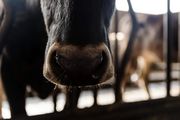
- © Georges and Tina Hemmer-Mack
In December 2019, the European Commission published a communication about the European Green Deal. The goal of this instrument is to bring about a transition towards a modern, resource-efficient, and competitive economy.
Read more....Fairebel - the Belgian Fair Milk in pictures
-
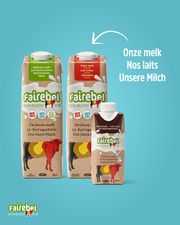
- © Fairebel
Come join us on a picture journey with Fairebel and meet the people – farmers, Fairebel supporters and consumers – who make fair milk possible in Belgium.
See more....Lithuania at a critical junction
-

- © LPGA
The situation in the Lithuanian milk sector has turned critical overnight. Over the past nine months, the price of raw milk has rapidly declined. Concurrently, the number of dairy farmers, as well as the overall number of dairy cows, is decreasing as well. Between the first quarter of 2022 and 2023, the number of dairy cows dropped by over 4000 cows, which is a 2% decrease. Unsurprisingly, milk production has also decreased, by 3,6% over the same period.
Read more...Five-year anniversary of Di Fair Milk Säuliamt in Switzerland
-
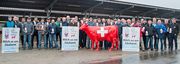
- © Di Fair Milch Säuliamt
The anniversary of the Di Fair Milch Säuliamt regional project was an occasion for many media outlets to report on it. Everyone was impressed by our performance figures. “Why does this project not exist for Switzerland as a whole?”, that is a question that came up again and again.
Read more...When mass retail acts with impunity!
-
- © Uniterre
Mass retail has totally disrupted the dairy market, which was already on knife’s edge, by buying out multiple processing companies.
Read more...Representatives from 14 European countries call for an end to political ignorance in the EU
-

- © EMB
With 18 organisations from 14 countries, the EMB’s first Members' Assembly this year in Brussels attracted a strong turnout. The discussions among the member organisations were further enriched by exchanges with guest speakers from the retail sector and from the organisation European Coordination Via Campesina (ECVC). During the two days of the assembly held at the end of June, the situation on the international dairy market was analysed and constructive projects, ideas and possible cooperation initiatives were discussed.
Read more...2023, the year of customer canvassing for Faireswiss
-
- © Faireswiss
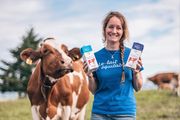
In Switzerland, the Faireswiss range of products finds it difficult to make its way into mass retail. That is why the cooperative has decided to reduce its communication budget and to concentrate on customer canvassing. To this aim, the Faireswiss board has decided to employ someone part-time to canvas food stores, restaurants and other facilities that prepare a large number of meals like residences for persons with disabilities, schools, hospitals etc.
Read more...Temporary discounts are not a solution
-
- © EMB
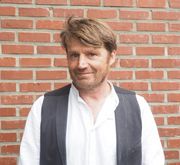
Prices are sinking again and it is often surprising how quickly things can change, especially when it comes to supermarkets. For example, let’s look at butter: a well-known supermarket chain is attempting to attract customers with their rock-bottom bargain price of 1.59 euros for a pack of butter. Competitors are also following this trend: 1.49 euros as of today. Retail chains permanently rely on price reductions for milk products when it comes to advertising. The price for butter at the end of last year was almost a euro higher. This doesn’t just happen by chance. It calls for a thorough analysis and understanding of such price fluctuations as well as a careful monitoring of the market and an evaluation of the underlying factors.
Read more...D’fair Mëllech in Luxembourg: safeguarding fair prices for dairy farmers and consumers
-
- © D’fair Mëllech
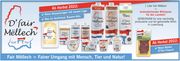
Forty-eight dairy farmers in Luxembourg came together in 2011 to found Fairkoperativ (FKL) and to create their own brand called D’fair Mëllech. The regular (inadequate) milk price is topped up to reach a fair milk price that would allow dairy farmers to make a decent living.
Future of dairy farming in Germany: challenges and opportunities in focus at Berlin conference
-
- © BDM
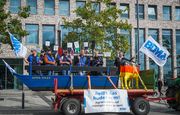
The conference organised by the Federal Ministry for Food and Agriculture on 31 August in Berlin concluded with the first indications from the ministry in favour of strengthening dairy farming. The BDM engaged actively in discussions with representatives from the dairy industry, research, NGOs, trade and with farmers themselves. We also expressed our criticism of agricultural policy to date with an action in front of the conference venue, and presented our expectations of this conference by publishing an eight-point position paper.
Read more...Die faire Milch in Germany: after a three-year break, we were finally back at the International Green Week in Berlin
-
- © Andrea Münnekehoff, Die faire Milch
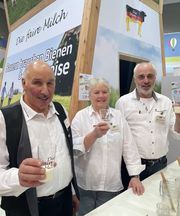
The figures speak for themselves: 1,400 exhibitors from 60 countries and about 300,000 visitors – that was the International Green Week 2023 in Berlin. Die faire Milch was also back with a stand in the North Rhine-Westphalia Hall. The network held together through the Covid-19 pandemic and kept in touch regularly. That is why we were looking forward to seeing each other and it was a joy to finally be back together in Berlin.
Sweden's dairy industry; protests, pressures, and policies
-

- © Sveriges Mjölkbönder
Sweden's dairy farmers have been making waves in recent months, tackling head-on the pressing issues facing their industry. The nation’s food chain has come under the scrutinizing gaze of Swedish authorities, eliciting our active participation to help shed light on the challenges we are facing.
Read more....FaireFrance: Faironika tours France!
-

- © FaireFrance
Since 2013, the FaireFrance brand has been selling dairy products at a fair price that permits producers to live off their work. A holistic concept that makes it possible to preserve family farms, cultural landscapes and local know-how. The brand celebrates its ten-year anniversary this year, with the support of French consumers that translates in strong sales growth.
Read more...Persisting controversy over Danish cattle exports to Russia
-
- © Vanessa Langer
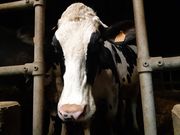
A few months ago, Danish daily Avisen Danmark ignited controversy with a report suggesting that despite the apparent cessation of cattle exports to Russia, Danish cows might still be reaching Russian soil, albeit through a detour via Hungary. To this day, the suspicions persist.
Read more...8th European Fair Milk Conference celebrates the commitment of farmers and honours contributions to social sustainability
-
- © EMB
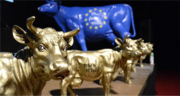
Something that should be commonplace in the dairy market has in fact become a rare sensation: for a few years now, Fair Milk has made it possible for farmers to earn a decent living. This brand founded in 2006 in Austria now puts socially sustainable products on supermarket shelves for consumers. At the Fair Milk Conference held in France, FaireFrance was joined by other Fair Milk projects and the European Milk Board asbl (EMB) to celebrate the progress of this important brand founded by farmers.
Read more...Spanish law: paying above the cost of production
-
- © Pixabay: Peggy_Marco
In 2021, Spanish law makers introduced a novelty to stop the destruction of value in the food chain. The Spanish agricultural organisation COAG (Coordinadora de Organizaciones de Agricultores y Ganaderos) gives us an overview.
The main cultural shift introduced by the recent amendment to the Act of 2021 is the concept of paying above the cost of production to avoid the destruction of value in the food chain. This aspect has been extensively demanded by organisations representing producers and it is a key factor for the sustainability of the European model of agricultural production. Amending the trade behaviour in the chain is obviously no easy task, but a necessary one for the future of agriculture and livestock farming in the European Union, along with many other measures that must be taken in this regard.
In particular, the Act specifies that the price set in the supply contract which has to be paid to a primary producer or a group of primary producers must always be higher than the total costs borne by the producer or the actual cost of production. This definition includes all costs borne to develop their professional activity. The following items can be taken into account, inter alia: the cost of seeds and plants, fertilisers, plant protection, pesticides, fuel and energy, machinery, repairs, irrigation, animal feed, veterinary fees, amortisations, interest on loans and financial products, agricultural contractors and manpower, work done either by employees or the producers themselves or by members of their family unit.
The production costs borne by each operator along the chain, not just the producers, are worked out individually and specifically. There is no one-size-fits-all or general definition of the costs per sector, per production field or per link in the chain, be it from either a public body or a private entity.
This is a clear progress, albeit it has not been possible to turn the tables immediately. Nevertheless, the foundations have been laid to reach this ambition. The mere fact that the buyers have started to consider that the producers they are buying from incur a number of costs that make up the purchase price is a breakthrough. Until recently, this matter was not considered in the agreed price, but was neglected in the food chain’s trade negotiations and relations. Moreover, this tool enables bargaining, up to a certain point, and whistleblowing by the producer in the event of a breach by the buyer.
The supervisory authorities both on a state level (AICA) and in the autonomous communities (CCAA) carry out inspections within their remit, both ex officio and in response to reports, leading to cases being opened to punish failure to comply with the prohibition of value destruction in the chain. In the first half of 2022 alone, for instance, eight claims involving retailers were filed on grounds of value destruction in the dairy chain.
Moreover, the prohibition of value destruction applies to every link in the food chain: each operator must pay the upstream operator immediately preceding it a price equal to or above the production cost borne. In addition, the sale at a loss at the last stage in the chain, i.e. to consumers, is forbidden, so that retailers will not be able to either offer or sell food products at a price below the one paid to purchase them. Failure to comply with this ban introduced by the Act can be subject to an administrative penalty imposed by either AICA or the CCAA, each within its sphere of responsibility.
In the current market context and as intervention measures have mostly disappeared from the EU public policies, these paradigm shifts have become necessary and must be applied throughout the European single market, through national policies and amendments to EU regulations.
Alvaro Areta García, Technical Officer, Coordinadora de Organizaciones de Agricultores y Ganaderos (COAG), October/November 2023
A call for sustainable changes in the European dairy sector
-
- © EMB
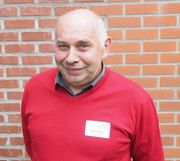
Since the EMB was founded fifteen years ago, we have been struggling – sometimes more, sometimes less successfully – to generate a revenue that would allow us and our families a decent life. 2022 was a better year – despite the fact that our production costs sky-rocketed. In Belgium, we had farm-gate prices of almost 60 cents per litre. Why is it then that over four months, this price paid to producers has fallen by 30% and is now at 36 cents per litre? While it is true that our price is closely linked to butter and milk powder exports, they have reduced by only 10% (4,564 euros/t for butter, 3,375 euros/t for milk powder). Something doesn’t add up.
Read more...EMB held a debate about agricultural sector with ECVC and MEP Biteau - market regulation so that the Green Deal does not exist in a vacuum
-
- © EMB
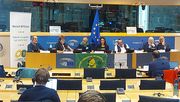
Fair prices and a stable situation for producers are preconditions for the successful implementation of the Green Deal. This means that it is necessary to equip the market with instruments that would stop and reverse the current destabilising trend and would create a functioning framework for the Green Deal, which has, until now, existed in a vacuum.
Read more...Legal notice
European Milk Board asbl
Rue de la Loi 155
B-1040 Bruxelles
Tel: +32 2808 1935
Fax: +32 2808 8265
E-Mail: office@europeanmilkboard.org
Website: http://www.europeanmilkboard.org