
Newsletter as PDF
Contact
EMB - European Milk Board asbl
Rue de la Loi 155
B-1040 Bruxelles
Tel.: +32 - 2808 - 1935
Fax: +32 - 2808 - 8265
Dear dairy farmers, dear interested parties,

Although we're already a good month into the new year, I would still like to wish you all the very best and good health for 2023. I would also like to take this opportunity to thank all EMB members who supported my election as President of the European Milk Board at the General Assembly in December 2022. I will do my utmost to defend the values and vision of our organisation, starting with this contribution to our bimonthly newsletter.
Every year holds a new set of challenges and 2023 will be no different. The mitigation of greenhouse gas emissions will likely be costly for dairy farmers, and yet the new CAP takes even more money away from us, leaving little scope for mitigation measures. As you all know, the end of 2020 saw the adoption of the EU’s European Climate Law as part of the European Green Deal, which defines more ambitious climate targets for 2030. By then, greenhouse gas emissions are to be reduced by 55% compared to 1990. In order to reach these goals, agriculture will have to contribute to mitigating greenhouse gas emissions, but the cost increase this means for dairy farmers leaves little leeway for our colleagues to become greener.
Recently, in Denmark, the new CAP reform was translated in new rules and regulations for farmers. As a result, dairy farmers are losing payments from milk production and the slaughter of young bulls, steers, heifers and cows. The latter compensations are replaced by a coupled payment in a range between 16 to 20 euros per cow and per year. For Denmark, this payment has been set at 18 euros per cow and per year. In addition, dairy farmers must ensure that 4% of their land is untilled, for example fallow surfaces, field edges, small biotopes and field shrubs.
Farmers can apply for various agricultural schemes such as planting environmentally and climate-friendly grass, varying their crops (beets, pulses, potatoes, etc.), enhancing biodiversity and sustainability on their farms (having more untilled land than the mandatory minimum of 4%), practicing extensification through yearly cuts (this only applies to peaty soils) and supporting organic farming practices.
The difficulty for many dairy farmers lies in the fact that pasture areas will shrink by at least 4%, while the standard admissible amount of phosphorus excreted by a dairy cow has increased by 9%, regardless of the feed ration. The upper limit of phosphorus that may be used per hectare makes things even more difficult in Denmark. It often excludes the use of starter P-fertilizer for sprouting maize plants, weakening them at their early stage and rendering them more vulnerable to various challenges. The expected decrease in yield per hectare, which inevitably impacts farmers’ income, has yet to be addressed by policy makers.
This newsletter features a number of contributions that explore the topic of the European Green Deal, alongside other articles on recurring topics such as the milk price and GMO-free milk. We hope you enjoy reading this newsletter.
Kjartan Poulsen, EMB president
Market indicators (on 30/01/2023)
-
- © wrangler/Shutterstock.com
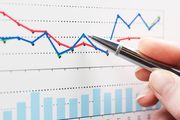
Key indicators in the dairy sector point to a downward trend on the market. The average price for Italian spot milk, for example, has fallen by almost 10 cents since December 2022 and was at 54.08 cents per kg of milk by the end of January. The price in January last year was 44.75 cents.
October 2022 in Germany: Milk production costs covered
-
- © EMB
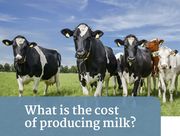
Long-term cost coverage is a basic prerequisite for stable production. According to the quarterly updated cost study by the Bureau for Rural Sociology and Agriculture (BAL), the production costs for October 2022 amounted to 47.51 cents per kg, while the average farm-gate milk price in the same period was 59.33 cents per kg. This means that the costs were covered during this period. As can be seen from the development of milk production costs in the past years, cost coverage was achieved only a few months earlier – in July 2022 – for the first time since the study came into existence.
Read more...The Green Deal, or how to keep asking more of farmers
-

- © Coordination Rurale
The three regulations that create the framework for the future Common Agricultural Policy (CAP) were adopted in 2018 and to a certain extent, they are the technical and legal provisions that serve to achieve a political vision and environmental ambitions that were only defined in 2019-2020. Besides the fact that the technical and financial means are not adapted to the goals set out in the strategies developed by the European Commission, these strategies were not subject to any prior impact assessment or evaluation before they were announced.
Today, however, it is no longer possible to deny the results of an impact assessment on the consequences of the Green Deal by the United States Department of Agriculture (USDA) as well as a technical report on the potential effects of the ‘Farm to Fork’ (F2F) and Biodiversity strategies by the Joint Research Centre (JRC) of the European Commission. The authors are on the same page about the fact that such policies will lead to a drop in production across all sectors, which will have a negative impact on the European Union’s trade deficit.
According to the study, the F2F strategy will cause production to plummet and prices to rise across the EU, with the required 50% reduction of nitrogen surplus having the most severe impact. Beef production will decrease by 20%, milk by 6.3%, cereals by 21.4% and oilseeds by 20%. The herd size will also shrink by 45% for sucklers and 13.3% for dairy cows. There will be reductions in terms of area as well: minus 2.6% for cereals and minus 6% for oilseeds.
The price of beef will increase by 58%, of pork by 48% and of milk by 36%. When it comes to the production of fresh vegetables, fruits and legumes, prices will increase by 15%, for cereals by 12.5% and for oilseeds by 12.5%. Once again, the 50% reduction of surplus nitrogen is the measure that will have the greatest impact. The other measures of the F2F strategy will have a more moderate impact, leading to a price increase of 5%, except for pesticide reduction which will lead to a price increase of 10% for oilseeds and fruit and vegetables.
The Green Deal is an attempt at maintaining production on less agricultural land, with less plant protection products and fertilisers, increasing the share of organic production, all for the global market and without protection against imports from third countries. Farmer remuneration seems like an afterthought and consumer consent – and for some time now due to inflation, purchasing power – also seem to be secondary concerns.
The successive CAPs since 1992 have only increased our food dependence, impoverished farmers, led to larger farms, made food more expensive, and increased the number of malnourished people! All this without the slightest global impact on greenhouse gas emissions.
For Coordination Rurale, this so-called Green Deal can only succeed if the Common Agricultural Policy undergoes a fundamental reform and regulates production and markets. This new deal for Europe must aim at cementing the coherence between agricultural, trade and environmental policy without placing farmers’ needs and consumer expectations at loggerheads. Europe must clearly and imperatively ensure healthy and sustainable nutrition for all its citizens. However, it is also necessary and urgent to ensure that farmers can have a decent and equitable quality of life and that their contribution in feeding the continent is recognised, so that they can continue to produce. This is one of the basic conditions for this Green Deal to succeed.
Farmers are an integral part of this change but they must be given the means and a conducive economic environment to play their part. Establishing the agricultural exception and food sovereignty as the founding principles of this strategy would be pioneering and would be a reorientation in this Europe that has abandoned its farmers for decades now. According to Coordination Rurale, Europe must adopt a new strategy that consists of limiting the import of products to those in shortfall while trying to reduce all imports as much as possible to avoid competition with internal production, pursuing the goal of self-sufficiency in all sectors where possible. This requires the implementation of variable, protective customs duties at the borders of the EU.
Véronique Le Floc’h, President of Coordination Rurale, dairy farmer in Finistère
APLI position regarding the Green Deal
-
- © Vanessa Langer, EMB
APLI (the French association of independent milk producers) defends the interests of dairy farmers without denying the existing climatic challenges. In fact, climate change is leading to more frequent events with negative consequences for producers (drought, floods etc.). Hence we fully understand why the EU wishes to have an agricultural sector that is increasingly carbon-neutral and environmentally friendly.
Read more...Effects of Green Deal on Ireland impossible to predict in detail – but overall production will certainly fall
-
- © Don Moloney Photography Ltd.
The EU’s Green Deal proposal envisages a carbon-neutral EU by 2050 to be achieved through changes across a range of sectors, with Irish agriculture playing a significant role in Ireland’s response. The EU Green Deal has set targets to halt biodiversity decline, improve water quality, and to reduce fertiliser and pesticide use.
Read more...European Green Deal in Luxembourg
-
- © Georges and Tina Hemmer-Mack
In December 2019, the European Commission published a communication about the European Green Deal. The goal of this instrument is to bring about a transition towards a modern, resource-efficient, and competitive economy.
Read more....Let’s seize the opportunity!
-
- © Phillip Brändle, AbL
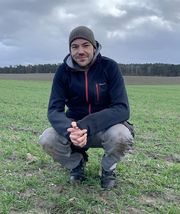
It is safe to say that what the European Commission is planning to undertake with its ‘Farm to Fork’ strategy (F2F) is quite novel. It aims to reduce nutrient loss in the EU by at least 50% by 2030, while maintaining soil fertility. The same is foreseen for pesticide use as well. In addition, according to the F2F strategy, the share of organic farming should increase to 25%.
Read more...Echoing the European Green Deal in Norway
-

- © Bondesolidaritet
Although Norway is not a member of the European Union, the Norwegian government has come to a similar conclusion as the European Green Deal and thinks that agriculture must play a substantial role in the transition to a sustainable (near) future.
Read more...Reality check a major blow to political objectives
-
- © EMB
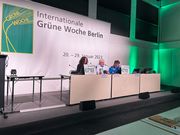
The objective of having a regional, independent, and sustainable agriculture cannot be reached with the current EU policy. Reforms are urgently needed!
* More independence and better food security
* More regional production
* Small and medium-sized farms, along with greener farms, should be the backbone of European agriculture
* Consistently sustainable farming
Latvian milk price is the third lowest in the EU
-
- © Kaspars Melnis, LAOCC
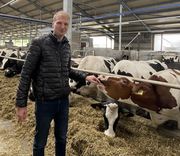
Although the average purchase price of milk in Latvia reached 0.49 euros per litre at the end of last year, the farm-gate price paid to Latvian dairy producers was still the third lowest in the European Union (EU). We call on the new Minister of Agriculture to set a goal: Latvian milk should attain at least the same price purchase as Lithuanian milk.
Read more...Modest milk price increase in Switzerland
-
- © Susanne Jutzeler, Pixabay
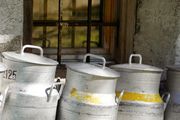
As of 1 January 2023, the milk interbranch organisation has increased the reference price for A-milk (i.e. the protected segment) by 3 centimes. At the same time, however, deductions under the “raw material price reduction” fund have also increased by 2 centimes.
Read more...News from BDM in Germany
-
- © BDM
The German dairy farmers’ association (BDM) was again very active towards the end of the year. After an interval of many years, we put up a stand at the Eurotier 2022 trade fair and it garnered much interest. At a joint EMB and BDM strategy meeting in Hanover, participants from ten countries discussed the future direction of the EMB. The importance of such discussions is showcased by the fact that the milk price is expected to fall once again in 2023.
Read more...Legal notice
European Milk Board asbl
Rue de la Loi 155
B-1040 Bruxelles
Tel: +32 2808 1935
Fax: +32 2808 8265
E-Mail: office@europeanmilkboard.org
Website: http://www.europeanmilkboard.org