
Newsletter as PDF
Contact
EMB - European Milk Board asbl
Rue de la Loi 155
B-1040 Bruxelles
Tel.: +32 - 2808 - 1935
Fax: +32 - 2808 - 8265
Dear dairy farmers, dear interested parties,

On 27 May, European farmers gathered in Brussels yet again to voice their concerns. It seems that our policymakers need to be reminded of our existence and of where our food comes from on a regular basis. That is why we are protesting.
In our discussions with policymakers from ministries and parliaments, everyone seems to agree that ‘fair income’ for farmers and especially for family farms is the only way forward. Coffers are empty and we need innovative solutions to involve the market in the restructuring of the agricultural sector. The call for EU legislation that prohibits prices below production costs makes sense. The only way to ensure that the real costs in the value chain are reflected in producer prices is by carrying out a bottom-up calculation. The crisis instruments we have been proposing for years are an important safeguard and essential in this context.
Contracts stipulating the volume/price/quality/term – without exemptions for cooperatives – are another precondition. It might even be possible to conclude tripartite contracts in the value chain. Only then can producer or producer organisations negotiate on an equal footing. The only way to safeguard food sovereignty in Europe is by implementing novel ideas that create future prospects for young farmers as well.
Mirror clauses are also necessary to ensure that products are not simply imported from abroad, where production standards are noticeably lower. Otherwise, European farmers do not stand a chance in the long run, and this will significantly change the way we maintain European cultural landscapes as well.
Fair Milk is a shining example for the way forward – it embodies many of our demands:
- Fair prices and fair to farmers
- Fair to nature.
- Fair to the climate.
Elmar Hannen, EMB Executive Committee member and BDM member
Farmers demand fair income so that they can guarantee food sovereignty
-

- © EMB
Farmer's delegations from all over Europe have gathered today at an impressive protest in the heart of Brussels to call for fairness in the agricultural sector. Under the slogan “A fair income for farmers - NOW!”, the participants presented their demands to the EU Agriculture Ministers meeting today, to the European Commission, the European Parliament as well as to other agricultural associations. As an umbrella organisation for European dairy farmers from over 15 countries, the European Milk Board (EMB) organised this important protest in the lead up to World Milk Day and the European elections. The protesters came with life-size cows in their national colours - the Faironikas or Justines that symbolise the diversity and unity of the movement.
Read more...Situation in Ireland
-
- © ICMSA
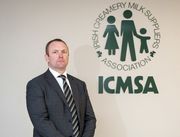
Irish dairy farming in 2024 is at a crossroads. The first half of the year has been characterised by poor weather conditions, high costs and an uncertain policy environment, not helped by this year’s local and European Parliament elections. The poor weather has been the most notable negative factor as we head into the second half of 2024. Even those parts of Ireland that normally escape the heaviest rainfall experienced record-breaking precipitation, and we have had livestock being housed in Ireland until April – a full month after they would normally be turned out to grass.
Read more...Danish government takes away derogation like a thief in the night
-
- © LDM
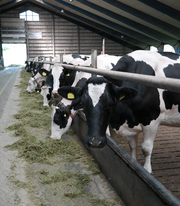
From 31 July, the Danish dairy farmers will lose their derogation permitting a maximum stocking rate of 230 kg N per hectare. After 22 years, the news hit dairy farmers out of the blue. On 10 April, the Ministry of Environment published a press release announcing that the cattle derogation would expire at the end of July 2024.
DigiFLUX sparks debate in Switzerland
-
- © uniterre
Alongside protests across Europe, Swiss farmers decided to speak out and voice their frustration. Among their concerns, the administrative burden is high up the list, which is why a new measure that the Federal Office of Agriculture plans to progressively implement as of 2025 was rejected at once.
Read more...Norway: Where does the money go?
-

- © Bondesolidaritet
Even though adverts have been telling us for many years that ALL grocery chains in Norway are constantly lowering prices, food prices have actually risen steadily and significantly over the years.
The last four years have seen enormous consumer price increases despite the fact that the prices paid to farmers have only risen very modestly. Between 1985 and 2024, both the farm-gate milk price and the price we pay in a shop for a litre of whole milk have changed, see chart below.
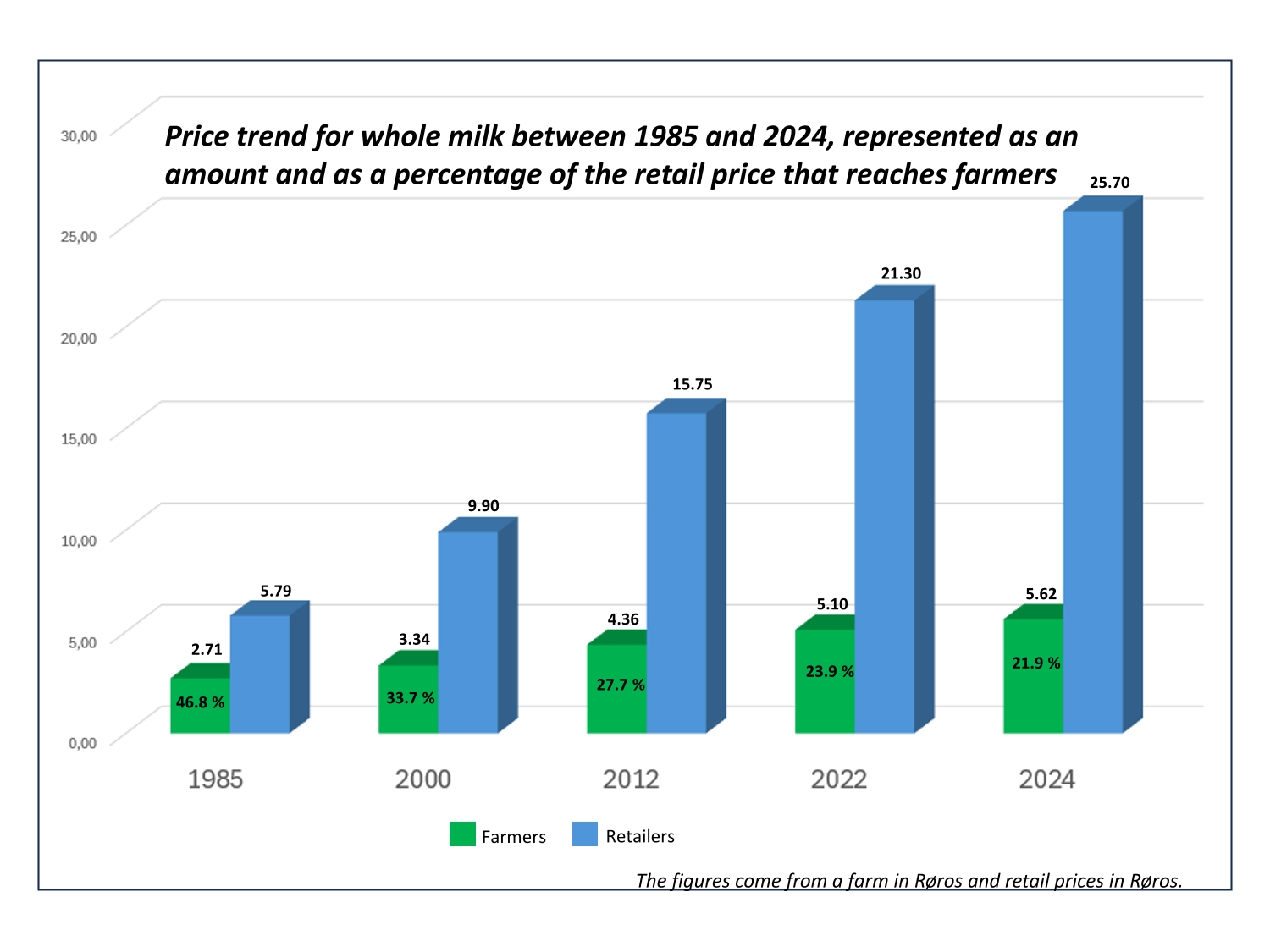
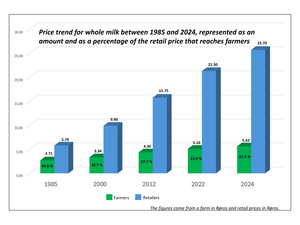
In 1985, the farmers’ share of the retail price was 46.8%. In 2024, this figure is down to 21.9%. In 1985, the farm-gate price was 2.71 Norwegian kroner (NOK). 39 years later, it has increased to NOK 5.62. It might have doubled in almost 40 years, but the retail price went from NOK 5.79 to NOK 25.70 over the same period – an increase of 343%.
The distribution of "milk money" has changed considerably over the last 40 years. There are two links between farmers and retail customers. The dairies – essentially the TINE system (cooperative of Norwegian dairy farmers) – constitute the link that collects the milk from farms, processes it and transports the final products to the shops. Of course, they have to get paid for this, and the income of those who work in this part of the sector pretty much follows wage trends in the rest of the business world.
Grocery chains sell the products in their shops and basically have two tasks: to transport milk and other products from their warehouses to their shops and to take payment from consumers at the till. The greater share of product costs in the dairy sector are incurred after the milk leaves the farm. As a result, the milk price increases by almost 20 kroner from the moment it leaves the farm to the time we put it in our shopping carts as consumers.
Lack of transparency
It seems impossible to figure out how revenue is distributed between dairies and grocery chains. The retail chains have been allowed to manage matters in such a way that no information is available on how much they pay to have a litre of milk in their shops. This is to maintain competition between the chains. The Norwegian Competition Authority (which now also includes the Norwegian Pricing Authority) has signed off on this lack of transparency.
In the open society we wish to live in, it is high time for us to have insight into such matters. When you see the food retailers rolling in cash while claiming that they have low profit margins on foodstuffs produced – among other places – in Norway, the demand to see the full accounts is more than justified. Both farmers and consumers may well be the losers in this game, which is carefully calibrated by the few who control virtually all food sales in this country.
TINE: a key player in the Norwegian dairy market
TINE is a big player owned by Norwegian farmers. It is therefore logical that the owners should know at what prices their company is selling their products. It must also be known how much the retail chains are charging individual suppliers for shelf space. How much does TINE have to pay to get the chains to sell their products?
In addition to TINE, there are some other intermediate links between farmers and grocery chains. For consumer milk, you have the private dairies Q-Meieriene and Rørosmeieriet. The latter buys its raw material from TINE. The Q dairies have two facilities in Gausdal and Jæren, which have contracts with selected farms from which they source their milk. 75 farms deliver to Gausdal and 220 farms to Jæren. In total, these farms have 14,000 cows, an average herd size of almost 50 cows. This is a high average by Norwegian standards, and there is reason to believe that these dairies therefore benefit from cost-effective milk transport from large farms that are relatively close to the dairy.
As a market regulator, TINE is obliged to collect milk from all farmers who wish to supply (regardless of size and geographical location of the farm). By the same vein, TINE is also obliged to supply all shops that wish to sell these products (again, regardless of size and geographical location). This creates additional costs for TINE that the other dairies do not have to bear and is a crucial point in the current debate about market regulation. This system ensures that we can produce food throughout the entire country and have access to these products from North to South. It is worth mentioning that farmers must be guaranteed a decent income they can live on as well as most other groups in society!
It is time to debunk the 'truth' that grocery moguls try to sell us, i.e. that lower prices in their shops mean lower prices for customers. Grocery chains charge whatever the market is willing and able to pay. The farmer’s modesty while negotiating target prices has only meant that the Reitan family, the Johansson family and the bosses at COOP are able to make common cause.
Even Erlien, Leif Langen, Trond Langen and Arnfinn Nergård, Board Members, Bondesolidaritet
Implementation of Article 148 CMO – ‘dairy’ associations in full swing
-
- © Vanessa Langer
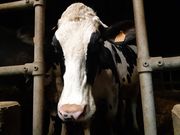
The German Farmers’ Union (DBV) and German Raiffeisen Association wrote an open letter to Federal Finance Minister Christian Lindner. The aim is probably to gain his support in preventing the transposition of Article 148 CMO into national law. By now, the dairy sector association (MIV) seems to take a more relaxed stance on this matter, stating that the Federal Ministry of Food and Agriculture (BMEL) should finally take action and do what they couldn’t help doing.
Read more...Shortfall of 6.7 cents/kg in production cost coverage in Wallonia in 2023
-
- © MIG
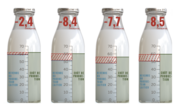
After 2022 where revenue on dairy farms was higher than production costs - a first in many years - 2023 saw a return to less viable times. On average, the cost coverage shortfall, i.e. the difference between production costs and revenue, was 6.7 cents per kg. This was mainly due to the reduction in milk prices while production costs remained stable at about 59 cents per kg including target remuneration for producers.
Read more...Germany: Liberals blocking the market
-
- © Bente Stachowske
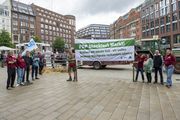
On 29 May 2024, dairy farmers from AbL, BDM and MEG Milch Board protested with a cow at the Gänsemarkt square in Hamburg. They called on the Liberal party to stop blocking obligatory milk supply contracts and on the two other parties in the three-party coalition not to give in to this pressure.
Read more....Milk producers demand a new European agricultural policy that also supports young people
-

- © EMB
The most recent General Assembly of the European Milk Board asbl focused on the young generation of farmers. Dairy farmer delegations from across Europe discussed how to make the sector profitable again in order to attract young people towards agricultural production. Committed young farmers contributed to this emotional discussion with impressive speeches and presentations. The question “What is important for young farmers?” was at the heart of the lively, constructive debate, where the young participants explained their priorities and points of view. Furthermore, Pierre Bascou, Deputy Director-General of DG Agriculture and Rural Development, accepted the EMB’s invitation and attended as a representative of the European Commission. He talked to the General Assembly about the EU’s recent young farmers strategy as well as about measures to improve the producer position.
Read more...Fair prices - fair incomes: new Parliament must end social and economic marginalisation of farmers
-
- © EMB
EU citizens have elected a new parliament and have voted against ‘business as usual’. This election has shown that politics must finally be for and with citizens. In agriculture, too, political strategies must be developed together with the people who work and operate in the sector. Farmers have felt left behind and socially and economically marginalised for many years.
Legal notice
European Milk Board asbl
Rue de la Loi 155
B-1040 Bruxelles
Tel: +32 2808 1935
Fax: +32 2808 8265
E-Mail: office@europeanmilkboard.org
Website: http://www.europeanmilkboard.org