
Newsletter as PDF
Contact
EMB - European Milk Board asbl
Rue de la Loi 155
B-1040 Bruxelles
Tel.: +32 - 2808 - 1935
Fax: +32 - 2808 - 8265
Dear dairy farmers, dear interested parties,

The discussion around the reform of the Common Market Organisation (CMO) is gathering steam in Brussels – and it affects us all because the plan is to conclude this process by the end of 2025. As the European Milk Board, we welcome the fact that the European Commission has taken up some key points that we have been underscoring for years: more clarity in contracts, better market rules and a stronger position for producers. Time is of the essence: the Commission warns that only one in ten farmers across Europe is below the age of 44 years. The sector’s ageing demographic shows that something is off.
At the heart of the reform is the proposal to make written contracts between producers and buyers compulsory for all milk deliveries. This is useful and necessary. Many of us today deliver our milk without prior price negotiations – this is an unacceptable situation in a so-called market economy. In future, contract conditions like price, volume, quality and term must be decided before delivery. This would lead to greater transparency, planning certainty and room for negotiation for us dairy farmers.
That being said: for such contracts to be truly effective, they should not be watered down. We need clear preconditions, like milk prices that cover production costs – including fair remuneration for our work. Furthermore, cooperative dairies cannot be exempt. That is, in fact, where many producers feel like they do not have a voice and are subject to price pressure. Uniform contractual rules must apply to all – irrespective of the buyer’s legal form.
The CMO reform is an important step, but it is only the beginning. The structural issues plaguing the dairy market persist: production that does not align with demand, very little real competition for our milk, too many dependencies. The dairy industry wants to maintain the status quo to hold on to their supply of cheap raw materials. We have a responsibility towards those taking over our farms, to the planet and to citizens, which is why we call for a further-reaching debate that aims to completely restructure the dairy market.
It might be useful to look at Canada. Milk producers sell their milk through Milk Marketing Boards that pool supply, plan volumes and conclude supply contracts with dairies. Production is aligned with national demand and structural surpluses are avoided. The milk price is calculated based on production costs and is not determined by the volatile global market. This system protects against price collapses, ensures stable income and offers family farms economic prospects – without direct public subsidies albeit with politically regulated volumes and market access. Considering a similar model does not mean adopting it in this exact form. The idea is rather to create an open market with fair competition as its foundation.
Such a model is possible in Europe. It needs the courage to usher in change, political support and a strong signal from us producers – we must show our commitment! Let’s capitalise on this latest reform as an opportunity to rethink the dairy market as a whole. An opportunity for fair contracts, market stability and a future for farmers worthy of this profession. Let’s not forget: if large lobbyists are so steadfastly against the CMO reform, it can only mean one thing – we are on the right track.
Jens Scherb, member of the EMB Executive Committee
Fragmentation, instead of unity – less Europe in the European Commission’s new proposals
-

- © Pixabay, Jorono
The European Commission’s current financial proposals give rise to fears that European cohesion will lose strength. If, in future, the agricultural budget must compete with other sectors and if Member States decide in a dominant and individual manner how, for example, environmental services and funds for rural development are distributed nationally, the European Union risks becoming a European Patchwork. This would lead to increasing inequalities and uncertainty, especially for farmers.
Read more...European Milk Board: European General Assembly
-
- © EMB
At the latest EMB General Assembly, member organisations from numerous European countries met to discuss the key challenges faced by the dairy sector. Everyone agreed: even if farmers are now paid cost-covering farm-gate prices more often than before - i.e. we have made progress in achieving one of the EMB’s goals – the fundamental issues plaguing the dairy sector persist and they must be addressed NOW. It is time to stop farms from going out of business – European dairy farmers demand rigorous reforms for future-proof agriculture.
Read more...Dairy cows – a problem or part of the solution?
-
- © Maud Lewis Gashaza
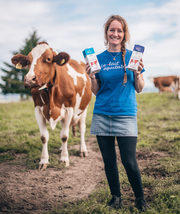
Today, many dairy farmers are suffering because their profession does not get the recognition it deserves. If we want to highlight the value of dairy farming, perhaps we should begin by singing the praises of dairy cows. We need to understand their essential role in our agricultural system and showcase their many contributions. I have therefore decided to give my dairy cows a voice. I interact with them day in day out and they are a part of my life. But I realise that the public at large knows very little about them. So, I will do my best to speak on their behalf.
Read more...Di fair Milch Säuliamt: Introducing Fair Milk Glacé
-
- © Di fair Milch Säuliamt
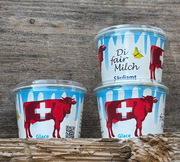
At the Annual General Meeting of the Di fair Milch Säuliamt cooperative in 2024, the members – despite the Board’s reservations – decided to bring Fair Milk ice cream on the market, alongside fair milk and fair cream caramels. Just in time for the start of the summer season, the cooperative has now launched sales of regional Säuliamt Fair Milk ice cream.
Read more...Irish dairy sector 2025: record milk output meets rising regulatory costs
-
- © ICMSA
The Irish dairy sector has seen a positive first half of 2025. Weather has been pleasant, with cows able to get to pasture early, and grass growth has been strong over the course of the first six months. Rain has been moderate with a really dry May followed by a much-needed wet spell in June, hence the growth in pastures has been above and beyond 2024 levels.
Read more...Sweden: Subsidies, subsidies, subsidies
-

- © Pixabay: Paul Moore
Subsidies, more subsidies and then some? Has everyone become a beggar these days? Farmers’ organisations such as LRF (Lantbrukarnas Riksförbund - Swedish farmers’ union) and KRAV (Swedish organic food certification body) increasingly demand more support and subsidies, while society keeps piling public responsibilities onto farmers’ shoulders.
500 years since the German Great Peasants’ War: the Twelve Articles today from the farmer perspective
-
- © BDM
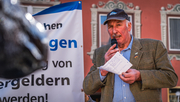
On 20 March 2025, a solemn event in Memmingen looked back at something that took place 500 years ago at this very place: the adoption of the “Twelve Articles” by the so-called “Farmers’ Parliament” of 1525, a ground-breaking document of farmer self-determination and a milestone on the long road to freedom, equality and human rights.
Read more...MIG General Assembly: evaluation, prospects and campaigning
-
- © MIG
On 11 June 2025, MIG, the independent association that represents over 250 milk producers in Wallonia, held its General Assembly, a key moment to look back at the past year and to discuss the future. It was an occasion to evaluate the economic challenges in the sector based on production cost studies and market analyses.
Taking stock of 2024 with its wealth of actions and activities
2024 was a year of intense advocacy and political work. MIG mobilised against the EU-Mercosur trade agreement in collaboration with other Walloon agricultural organisations. Bluetongue disease was another issue where MIG was active, conducting two surveys in the lead-up to a meeting with Minister Anne-Catherine Dalcq to make the case for farmer compensation. The organisation is also against the proposed European legislation on the transport of unweaned calves, and we drafted and co-signed a letter sent to DG Sante at the European Commission. Meetings with several political parties in view of upcoming elections, with dairies and with distributors were part of MIG’s advocacy work for a fairer sector.
MIG was also very active on the ground: organising a protest with 300 tractors, participating in sectoral events and in meetings on dairy issues. Communication flowed as well, with production cost studies, regular newsletters, member consultations, and participation in TV programmes and agricultural trade fairs.
Objectives for 2025: continuity, commitment and new energy
In 2025, MIG plans to keep up the pressure against Mercosur and the draft regulation on the transport of calves. It is also against land grabbing by large enterprises for carbon offsetting projects. The organisation is also looking to continue its collaboration with key stakeholders in the sector and to renew its board to guarantee dynamic and committed representation.
Financial viability needs special attention
An examination of the 2024 accounts showed that costs must be kept in check to ensure the long-term viability of MIG. A tighter budget for 2025 was adopted. Christian Wiertz was re-elected as president, along with several board mandates being renewed as well. There was also a discussion around the future of MIG and its priority actions.
Milk market: reassuring figures but uncertainties prevail
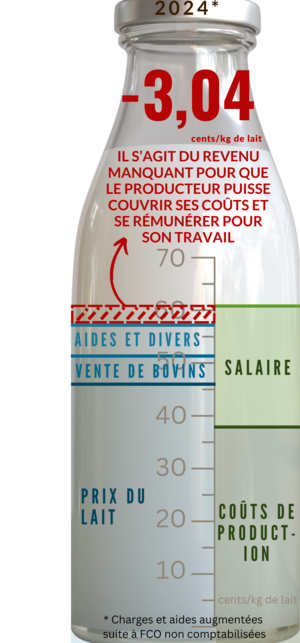
Finally, a presentation by Winch Projects consultancy was a chance to analyse the situation on the milk market. While current prices permitted production cost coverage for the third quarter of 2024 and the first quarter of 2025, an average loss of 3.04 cents per kg was nonetheless recorded for the total year of 2024. While producers are currently in a favourable financial position, this precarious balance could easily shift.
 Picture: MIG
Will this positive situation last or is it just a short respite? The reduction in milk collection, undoubtedly related to bluetongue, has played a part in raising milk prices. But is this drop in production temporary? If milk deliveries increase in coming months, will the prices hold? There are many questions that draw a veil of uncertainty across income stability for milk producers.
Sandy Manfroy, desk officer, Milcherzeuger-Interessengemeinschaft (MIG)
Legal notice
European Milk Board asbl
Rue de la Loi 155
B-1040 Bruxelles
Tel: +32 2808 1935
Fax: +32 2808 8265
E-Mail: office@europeanmilkboard.org
Website: http://www.europeanmilkboard.org