
Newsletter as PDF
Contact
EMB - European Milk Board asbl
Rue de la Loi 155
B-1040 Bruxelles
Tel.: +32 - 2808 - 1935
Fax: +32 - 2808 - 8265
Dear dairy farmers, dear interested parties,

Some prices are sinking again and it is often surprising how quickly things can change, especially when it comes to supermarkets. For example, let’s look at butter: a well-known supermarket chain is attempting to attract customers with their rock-bottom bargain price of 1.59 euros for a pack of butter. Competitors are also following this trend: 1.49 euros as of today.
Retail chains permanently rely on price reductions for milk products when it comes to advertising. The price for butter at the end of last year was almost a euro higher. This doesn’t just happen by chance. It calls for a thorough analysis and understanding of such price fluctuations as well as a careful monitoring of the market and an evaluation of the underlying factors.
Buzzwords like price leader and top price/benefit performer do not bode well. If there’s a winner, there’s usually a loser too, and in this case, it's producers. While many consumers are happy about such discounts, this downward trend represents a loss for dairy farmers on every litre of milk produced by their cows. According to the most recent calculations, production costs on our farm are 45 to 46 cents per litre. And the farm-gate price paid by our dairy has now fallen below this figure. This means that at the end of the month, I need to ask myself: can I still pay all my bills?
It is true that milk has recently been very expensive... for consumers. Cheese costs about 43% more than it did last year. Despite high feed prices, farmers did, in fact, make a profit for a short period of time. However, we then had a situation where some farmers increased production because returns were good. Demand also dropped at the same time due to high prices. As a result, we ended up with milk surpluses that were exported around the world at cheap global market prices. In order to boost local demand, European retailers tried to lower prices. This has pushed many German farms into the red.
Even though energy costs and farmer income have already dropped, processors in particular, e.g. those who make milk products, have maintained their high prices. This basically means that dairies have been able to make a profit – unlike farmers. International stakeholders in particular have cashed in over recent months, profiting in the shadows off the inflation across the board. Large corporations like Unilever and Danone have reported significant profits for 2022. And they are also reporting good turnover for the first quarter of 2023.
This is possible because of an underlying mechanism that allows dairies and processors to adjust producer prices every month. However, they themselves usually enjoy long-term agreements with retailers. Recent years have been characterised by the expectation of rising energy costs. Agreements were concluded on the basis of these higher costs, which, in turn, led to inflated prices for milk, yoghurt, cream and the like. These contracts run for something like half a year. If costs fall in the interim, there is a certain momentum where you can benefit from windfall profits. On the other hand, retailers can also make profits thanks to these contracts – everything is relatively opaque.
During market research, consumer protection organisations flag up unclear price setting practices. Some kind of market transparency body could be a possible solution for this issue. Excessive price volatility should be analysed more closely and must be explained, in order to clarify to what extent price evolutions are justified. At the of the day, the cost of foodstuffs is probably going to remain high for a while. Temporary discounts, like the ones being offered on milk products at the moment, will do little to change this reality.
The current market situation makes it absolutely necessary to urgently activate voluntary production reduction at EU level and to offer appropriate compensation in exchange until market balance has been restored. This is something that worked very well in 2016 and it would again protect many family farms from cost shortfalls, giving them some future prospects.
In the meantime, we are going to build on our direct sales in order to become more independent. The cheese that we produce on the farm with our own milk is sold at the same price as the French sliced cheese available in the supermarket. Things don't have to be expensive for consumers when there aren't so many middlemen profiting along the way.
Elmar Hannen, board member of EMB and Bundesverband Deutscher Milchviehhalter
Market indicators (on 30/05/2023)
-

- © wrangler/Shutterstock.com
On 16 May, the Global Dairy Trade Index (GDT) decreased slightly by 0.9% after having increased by 2.5% and 3.2% during the previous two periods. That said, the index has been on a predominantly downward trend since the end of 2022.
Was milk production profitable in 2022?
-
- © EMB
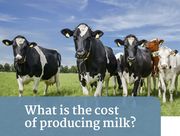
The profitability of milk production has been put to the test in recent years due to the end of milk quotas and volatile prices. However, the situation did temporarily improve in 2022 thanks to a surge in the milk price, but the ability to put aside savings remained weak on average.
Read more...When mass retail acts with impunity!
-

- © Uniterre
Mass retail has totally disrupted the dairy market, which was already on knife’s edge, by buying out multiple processing companies.
Read more...Cows belch methane, grasslands store carbon – and it all adds up
-
- © LDM
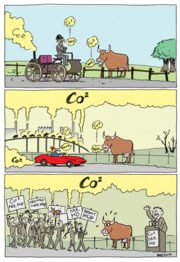
In Denmark, there currently is an intense political debate over how high a tax should be imposed on agricultural greenhouse gas emissions. Proposals range from 100 to 150 or even 200 euros per ton of CO2 equivalents. LDM argues that the digestive processes of cows should not be taxed because they are part of the natural carbon cycle.
Read more...Lithuania at a critical junction
-

- © LPGA
The situation in the Lithuanian milk sector has turned critical overnight. Over the past nine months, the price of raw milk has rapidly declined. Concurrently, the number of dairy farmers, as well as the overall number of dairy cows, is decreasing as well. Between the first quarter of 2022 and 2023, the number of dairy cows dropped by over 4000 cows, which is a 2% decrease. Unsurprisingly, milk production has also decreased, by 3,6% over the same period.
Read more...Dairy market summit in Bavaria
-
- © Lukas Barth-Tuttas
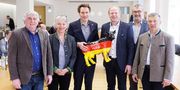
The current market situation and the resulting need for action were discussed at the Bavarian dairy market summit. The Bündnis 90/The Greens group in the Bavarian federal-state parliament had invited different dairy market stakeholders at producer level to participate in this event.
The outcome was the adoption of the “Munich Dairy Market Declaration”, which is a political statement that, among other things, says that variable costs have increased from about 27 cents per kg in 2016 to 45 cents per kg today. In addition to the BDM and AbL, the signatories include nature protection organisations and MEP Martin Häusling, who is a member of the Committee on Agriculture and Rural Development. The Europe-wide increase in milk deliveries together with a simultaneous drop in demand were identified as the main causes for the current state of the dairy market. It calls for three key demands: put an end to milk price collapses, keep farms active and ensure a resource-friendly approach.
Extraordinary Conference of German Farm Ministers in Berlin
The German Agriculture Ministers Conference was held in Büsum in Schleswig-Holstein in early 2023. Like in previous years, the BDM was present at this conference. Unfortunately, milk and animal husbandry were only dealt with superficially. That is why an extraordinary German Agriculture Ministers Conference was held on 5 May to deal with the outstanding topics. The BDM once again made its presence felt with an action on site and specifically underlined the challenges that come with changes in the livestock farming sector. On this issue, the individual ministers agreed that a reworking of rules on livestock stables and barns is urgently needed. A legislative draft is expected as early as this summer.
Federal Cartel Office with more powers in the dairy sector
Within the scope of the Dairy Sector Investigation, the Federal Cartel Office (BKartA) concluded that especially larger cooperative dairies have no real interest in high milk prices and that the dairy market is characterised by a flagrant market imbalance to the detriment of dairy farms. In the future, it should be possible for the BKartA to take appropriate measures to address competition-related abuses detected with the scope of a sectoral investigation.
World Milk Day
The BDM used the occasion of World Milk Day on 1 June to highlight the problems plaguing the dairy sector. Actions were organised in front of the individual Ministries for Agriculture in each federal state. The motto at these protests was “Dairy farmers must stay afloat while policymakers look on”. Large pools were set up in front of the ministries and were slowly filled with milk to show how farmers have to fight to keep themselves from drowning due to the mistakes made by policymakers.
Current milk market situation in Germany
Since last autumn, prices in Germany have been in freefall. While the average milk price was over 60 cents per kg in late summer 2022, prices paid by some dairies are now below the 40-cent mark. The Kiel Commodity Stock Index dropped to 37.9 cents per kg in April. Unfortunately, an end to this nosedive is not yet in sight. Spot milk prices had practically fallen to 25 cents in early May. This is a further drop of 5 to 6 cents as compared to April. Lower wholesale prices for dairy products and high milk deliveries are driving these trends. Currently, there is a strong North-South divide in Germany when it comes to the dairy market. While prices are falling more gradually in the south, they are currently in freefall in the north.
Henrik Kramer, Bundesverband Deutscher Milchviehhalter e.V. (BDM)
Legal notice
European Milk Board asbl
Rue de la Loi 155
B-1040 Bruxelles
Tel: +32 2808 1935
Fax: +32 2808 8265
E-Mail: office@europeanmilkboard.org
Website: http://www.europeanmilkboard.org