
Newsletter as PDF
Contact
EMB - European Milk Board asbl
Rue de la Loi 155
B-1040 Bruxelles
Tel.: +32 - 2808 - 1935
Fax: +32 - 2808 - 8265
Dear dairy farmers, dear interested parties,

The challenges facing dairy farmers today have never been greater, from milk price volatility, input cost increases and volatility, ever changing nitrate and other environmental regulations, climate change and weather, to name a number of key issues.
The European model of agriculture based on the family farm is a model worth protecting. Unfortunately, our political masters appear intent on dismantling the foundations on which this model is built, and developments in the Common Agricultural Policy (CAP) only highlight the complete lack of understanding that policy-makers have for the challenges facing farmers. Here in Ireland, the milk price has gone from 56 cents per litre in January to as low as 37 cents today. At the same time, farmers are expected to meet umpteen standards and regulations that seem to change on a yearly basis and become more complex each time.
Our political masters have a decision to make. Do they want environmental sustainability only and wipe out family farms, or do they want to address the three pillars of sustainability: economic, social and environmental? ICMSA is firmly of the view that the EU must address the three pillars of sustainability simultaneously because if we don’t, our family farm model will not survive. This requires a renewed focus on agricultural policy with the central objective of delivering a market price that allows farmers to earn a reasonable living from farming while meeting the required standards, which may mean that society will have to accept consumers paying more for sustainably produced food.
Food prices need to reflect the cost of producing it sustainably, which entails addressing the volatility in milk prices. This is where the EU Commission needs to be much more proactive in terms of monitoring the marketplace and taking early action where milk prices go below the sustainable cost of producing it. At the same time, the Commission needs to recognise that the family farm model in the EU is a huge asset that needs to be protected and supported. When the market becomes unbalanced, a correction is required because low prices fundamentally undermine the livelihoods of dairy farmers. The EU voluntary milk supply reduction scheme in 2016 delivered higher prices within months in a cost-efficient manner. ICMSA believes that a voluntary milk supply reduction scheme should again be part of the toolkit when milk prices come under pressure, helping to deliver a critical price correction in the shortest timeframe.
Currently, the milk price in Ireland is between 37 and 40 cents per litre, a substantial drop since the start of 2023. Unfortunately, input costs have not fallen to the same extent. As a result, some farmers are selling milk below or at the cost of production while extremely wet weather, in sharp contrast to many regions in continental Europe, has added to the pressures on farmers at this time. Dairy farming is going through a very difficult period, and the EU needs to urgently rethink its strategy lest dairy farming as we know it change inexorably for the worse. The sustainability of milk production in the EU has never been at a greater risk.
This newsletter features many interesting contributions from our members. Faironika (or Justine in French), the mascot of FaireFrance, tours the country. In Germany, the INIfair initiative for fair prices calls for a ban on supermarkets and dairies buying foodstuffs at prices below production costs. BDM analyses the national dairy policy in Germany while Uniterre does the same for Switzerland. The MEG Milch Board provides an overview of its activities, including a new brochure. Sveriges Mjölkbönder calls on Swedish authorities to tackle the urgent issues facing the dairy sector, while in Denmark the controversy over Danish cattle exports to Russia lingers.
Pat McCormack, President of the Irish Creamery Milk Suppliers' Association (ICMSA) and EMB Board Member
FaireFrance: Faironika tours France!
-

- © FaireFrance
Since 2013, the FaireFrance brand has been selling dairy products at a fair price that permits producers to live off their work. A holistic concept that makes it possible to preserve family farms, cultural landscapes and local know-how. The brand celebrates its 10-year anniversary this year, with the support of French consumers that translates in strong sales growth.
Read more...Germany: broad initiative for fair prices calls for ban on supermarkets and dairies buying foodstuffs at prices below production costs
-
- © INIfair
Many farmers sell foodstuffs to supermarkets at prices that do not cover their production costs. The INIfair initiative calls on German Farm Minister Özdemir to rework the Agricultural Organisations and Supply Chains Act so that fair payment from supermarkets and the food industry is guaranteed.
Read more...Switzerland: the dairy market is in difficulties yet again!
-
- © Uniterre
After rising milk prices in 2022, prices have been moving downwards in 2023 again. The change in ownership structures at Migros, a large Swiss retail company, is a threat to conditions for family farms.
The farm-gate milk price paid to producers increased in 2022: +6.53 centimes in the average price for A and B segments combined compared to 2021 (2022: 69.25 centimes - 2021: 62.72 centimes - detailed prices per segment below*). Of course, this increase was not enough to cover increases in production costs, and now prices have been decreasing yet again since the beginning of 2023. To illustrate this, here is the average price paid:
- January 2023: 71.4 centimes
- April 2023: 65.73 centimes (no up-to-date figures available at the time of writing).
This means a decrease of 5.67 centimes in four months. Why? A significant decrease in the B-segment milk price (-8.8 centimes between January and April 2023) as well as an increase in percentage of B segment milk:
- January 2023: 28.4%
- April 2023: 29.6%.
At the same time, we have heard that retail chains have asked marketing organisations to reduce prices of milk products – simply scandalous!
And at a more general level, another piece of bad news is haunting the future of small-scale farmers. Switzerland’s largest retailer, Migros, made a shocking announcement at the beginning of the summer: the Supermarkets division, which has operated as a cooperative until now, will henceforth function as a public limited company. We see this change as the removal of an important safeguard, opening the door to foreign investment and a possible worsening of conditions for family farms. This is a development that we will keep a close eye on because 30% of Switzerland’s agricultural production is marketed by this company.
*Average effective price for A segment 2022: 72.5 centimes (2021 = 67.4 centimes) / Average effective price for B segment 2022: 61.2 centimes (2021 = 50.6 centimes)
Berthe Darras and Vanessa Renfer, Uniterre
Persisting controversy over Danish cattle exports to Russia
-
- © Vanessa Langer
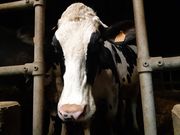
A few months ago, Danish daily Avisen Danmark ignited controversy with a report suggesting that despite the apparent cessation of cattle exports to Russia, Danish cows might still be reaching Russian soil, albeit through a detour via Hungary. To this day, the suspicions persist.
Read more...Germany: agriculture in transition
-
- © BDM
Budget cuts, new animal welfare standards and reductions in milk deliveries: only recently, Agriculture Minister Özdemir announced that he had managed to negotiate with Finance Minister Christian Lindner to bring the expected reductions in GAK ("Improvement of agricultural structure and coastal protection” scheme) funds down to 150 million euros. However, in the draft budget presented by the Cabinet, the reduction in GAK funding is once again stated as 293 million euros, which equates to a cut of one fourth compared to the previous funding period. This is not an encouraging sign for rural areas.
Read more...Sweden's dairy industry; protests, pressures, and policies
-

- © Sveriges Mjölkbönder
Sweden's dairy farmers have been making waves in recent months, tackling head-on the pressing issues facing their industry. The nation’s food chain has come under the scrutinizing gaze of Swedish authorities, eliciting our active participation to help shed light on the challenges we are facing.
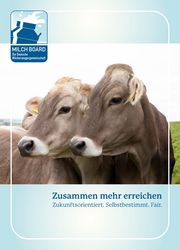
Read more....Going further together
-
- © MEG Milch Board
The dairy farmers association MEG Milch Board was founded in 2007 and has members all across Germany. It strives to strengthen the position of dairy farms to ensure their survival in the long term.
MEG Milch Board has recently produced a brochure that talks about its goals, up-to-date dairy market studies as well as the advantages that come with being a member.
Legal notice
European Milk Board asbl
Rue de la Loi 155
B-1040 Bruxelles
Tel: +32 2808 1935
Fax: +32 2808 8265
E-Mail: office@europeanmilkboard.org
Website: http://www.europeanmilkboard.org