Newsletter as PDF
Contact
EMB - European Milk Board asbl
Rue de la Loi 155
B-1040 Bruxelles
Tel.: +32 - 2808 - 1935
Fax: +32 - 2808 - 8265
Dear dairy farmers, dear interested parties,
In the lead-up to Christmas, we would like to look back on 2025 and remember the important events with articles that appeared in the EMB newsletter through the year. Europe celebrated important anniversaries in 2025, such as 80 years since the end of World War II. In March 2025, Memmingen commemorated the adoption of the ‘Twelve Articles’ by the Peasants’ Parliament 500 years ago – a milestone on the long road to farmers’ self-determination and justice. At the same time, times are more turbulent than ever: the ongoing war in Ukraine and the crisis in the Middle East, the Trump administration’s trade and tariffs policy with its consequences for markets...
After a comparatively good phase, producer prices for conventional milk are in decline once again. We therefore begin our review of the year with an open letter from the EMB and its member organisations to European Commissioner for Agriculture Christophe Hansen, calling on the European Commission to activate the voluntary production volume reduction scheme.
In 2025, the EMB and its member organisations continued to fight tirelessly for fairer remuneration of producers and the survival of family farms in Europe through a wide range of campaigns. They organised events and attended trade fairs such as SIA in Paris and the International Green Week in Berlin. They met with national and European policy-makers, contributed to the debate on the future of the Common Agricultural Policy (CAP), the reform of the Common Market Organisation (CMO) and the Multiannual Financial Framework (MFF), and took part in protests, for example against the Mercosur free trade agreement.
Although producer prices covered costs more often this year than in previous years, the EMB and its member organisations never tired of emphasising that the fundamental problems plaguing the dairy sector remain unresolved and must finally be addressed.
On a positive note, there was a noticeable shift in thinking at the EU institutions this year, with the European Parliament recognising the importance of fair framework conditions for agriculture. In a vote on a report about the European Commission’s proposals for amendments to the CMO, the majority of MEPs adopted a progressive vision. This report aims to strengthen the position of producers in the food chain – an important first step towards fairer markets.
Many of our member organisations reported on their problems and the lack of prospects for the dairy sector in the year that was. Legislative changes mean new requirements that lead to extra costs and cause uncertainty: the reform of the CMO, the CAP post 2027, the EU regulation on nature restoration, grazing requirements, the re-application and extension of its nitrates’ derogation in Ireland, the introduction of Bovaer® in Denmark, a possible revision of the Green Deal, to name but a few.
Although our Swiss member organisations are not part of the European Union, they also complain that the fundamental problems of the Swiss dairy sector remain unresolved. Our members Uniterre and BIG-M have called for a comprehensive reform of the Swiss dairy interbranch organisation (IP Lait).
In addition to the political framework, the economic parameters for many milk producers are also changing. The merger of Arla and DMK will create a cooperative giant – a development that many producers and their organisations view critically.
In this difficult environment, our Fair Milk projects showed yet again in 2025 that fairer producer prices are possible. At the Fair Milk Conference, people who have made a special contribution to the cause of dairy farmers were once again honoured, and the fifteenth anniversary of Germany’s Die faire Milch was celebrated.
The newsletter was also a space for critical reflections. The article by Faireswiss dealt with methane emissions from dairy cows and examined whether they are a harmful factor or part of the solution.
In these complex times, we wish you a peaceful Christmas and health, happiness and perseverance for the New Year. Recharge your batteries and gather your strength – the fight for cost-covering milk prices and fair conditions will enter its next round in 2026.
Your EMB team

Open letter from EMB and its member organisations to the European Commission: urgent activation of voluntary volume reduction!
-

- © European Union: Christophe Hansen
Dear Mr Hansen,
Europe is on the brink of another potentially devastating crisis in the dairy sector. In many Member States, milk producers are currently witnessing a sharp and accelerating drop in prices. Numerous farms – especially family farms – now face immediate threats to their existence.
Fairkoperativ meets with new European Commissioner for Agriculture
-
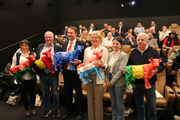
- © D’fair Mëllech: Pit Bosseler
On 13 January, Fairkoperativ, a cooperative of dairy farmers in Luxembourg, hosted Minister of Agriculture Martine Hansen and the new European Commissioner for Agriculture, Christophe Hansen, for a screening of the documentary “Trainée de poudre”.
Read more...Germany: Die faire Milch at the vanguard
-
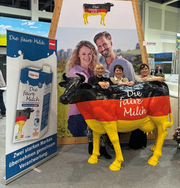
- © LANUV NRW
The German Fair Milk brand, Die Faire Milch, is considered a pioneer in milk production and the German dairy sector as it places regional milk products and sustainability at the heart of their model. The latest edition of their newsletter provides fascinating insights into the Berlin International Green Week as well as the awards ceremony recognising “regional stars”. Here are some of the highlights.
Read more...Ireland and dairy policy perspectives in 2025
-
- © ICMSA
As the new year has rolled in and farmers have settled back into our spring calving pattern, where we calve most of our cows in February and March to coincide with our grass-grazing season, Irish farmers have many thoughts on their minds – much more than the impending arrival of calves and damage from the latest storm. Here are the main issues concerning the members of ICMSA for the coming year.
Read more...MIG calls for a joint mobilisation at European level: the only way to make our voice heard against the nefarious EU-Mercosur agreement
-
- © MIG
Alongside several Walloon and European agricultural organisations, MIG is taking a firm stance against the free-trade agreement between the European Union and the Mercosur countries. This agreement poses a direct threat to agriculture, the environment and food security in Europe by nullifying all sustainability efforts.
Read more...EMB at SIA: From Paris with love
-
- © EMB
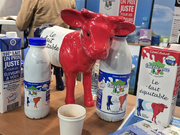
While the halls of the French agricultural show SIA were filled with thousands of discussions, the committed colleagues from FaireFrance served Fair Milk to numerous visitors and welcomed EMB representatives to their stand.
Read more...Arla/DMK merger creates new cooperative giant
-
- © EMB
EMB statement: “We have to talk about cooperatives! What cooperatives are – what they are not – and what they pretend to be!”
With the planned merger of Arla Foods and the DMK Group and an estimated combined pro forma revenue of 19 billion euros, a new cooperative giant will soon be on the market.
Uniterre, BIG-M, BBK and BZS call for a sweeping reform of IP Lait
-
- © Uniterre, BIG-M, BBK and BZS
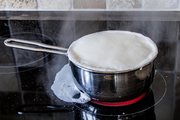
Multiple Swiss farmers’ organisations have called into question the role and legitimacy of the interbranch organisation IP Lait through a parliamentary motion. Their demand: a fairer governance system, more transparency in contracts, and milk prices aligned with production costs.
Read more...Faireswiss: a solution that addresses low dairy farmer income
-
- © Maud Lewis Gashaza
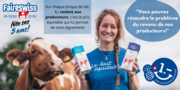
The Faireswiss cooperative markets Fair Milk in Switzerland that makes it possible to pay 1 Swiss franc per litre to its dairy farmers.
Based on the results of a centralised survey, Agroscope published agricultural revenues in late 2024: the average income in the dairy farming sector was 15 francs per hour in 2023. This is unbelievably low compared to the rest of the economy where wages were 42 francs per hour in 2023. As a result, Swiss milk production lost more than 50% of its producers in less than 30 years: we had 44,000 farmers in 1996; they numbered 16,759 at the end of 2024.
Against the backdrop of this dramatic situation, Faireswiss and their Fair Milk model is on the scene with a solution to improve dairy farmer income! While the current average price paid to producers is 70 centimes, Faireswiss pays 1 CHF per litre of milk, which largely allows to cover production costs.
Faireswiss is a cooperative of 75 milk producers distributed across Switzerland. It was created in June 2018 and the first carton of milk was sold in late September 2019 thanks to our first partner Manor. Since then, other retailers have joined the adventure: PAM and Edelweiss in Valais, Aligro, some Spar stores, and since 2024, Aldi stores in Romandy (the French-speaking part of Switzerland) and the cantons of Berne and Solothurn. Our milk is also sold in many local grocery stores as well as in collective catering establishments. For example, all the canteens operated by the city of Lausanne as well as the Vaud university hospital (CHUV) exclusively use Fair Milk. All in all, we have about 500 points of sale in Switzerland with most in the French-speaking part of Switzerland.
To join the Faireswiss cooperative, milk producers must commit to at least two of the three animal welfare and sustainability programmes in terms of animal feed: grassland-based milk and meat production (GMM), regular outdoor exercise for livestock (ROEL) and particularly animal-friendly stabling systems (PAS). Producers must also participate in outreach activities in shops or at events. It is very important for us at Faireswiss to be in contact with consumers, to make them understand the reality of milk production in Switzerland, to show them how essential it is to keep dairy farming in Switzerland as 70% of our agricultural land is grassland, and unlike ruminants, humankind cannot digest grass and it has no nutritional value to us.
Since the beginning of the project, we have sold 7.5 million litres of milk, with an average 1.6 million litres annually in recent years. We have also paid 2.4 million francs to the Faireswiss cooperative members since 2019. While it is true that Faireswiss is just a drop in the dairy ocean of 3.3 billion litres of milk produced every year, our project remains a beacon of hope for the sector. We wish more big retailers would play their part in making Faireswiss milk available to their consumers who should have a choice in stores. Despite our steady growth, the slow increase in sales means that we are unfortunately unable to admit new producers to the cooperative. And we have 120 producers on the waiting list! At the end of the day, if each inhabitant of Switzerland bought one litre of Fair Milk per month, this would mean an additional 6 francs per year and per inhabitant. And this can be life-changing for Swiss dairy farmers!
We invite you to consult the map with our points of sale or to visit our website (both available in German, French and Italian).
Thank you for supporting Swiss dairy farmers!
Berthe Darras, head of the Dairy Committee at Uniterre, EMB Fair Milk edition 2025
The dairy sector and the future (of the) Green Deal
-

- © EMB, Roberto Cavaliere
While a potential revision of the European Green Deal offers both challenges and opportunities, the possible – positive and negative – impacts on the dairy sector would be significant. Producers could face higher costs as a result of adopting greener practices, investing in sustainable technologies, and meeting stricter regulations.
Read more...Swedish dairy farmers at a crossroads
-
- © Ulrik Isleborn
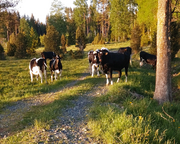
The milk price is currently acceptable for most Swedish producers. A few dairies are unable to match the price offered by the market leader, but there is a general hope among farmers that milk prices will at least remain at their current level.
Read more...European Milk Board: European General Assembly
-
- © EMB
At the latest EMB General Assembly, member organisations from numerous European countries met to discuss the key challenges faced by the dairy sector. Everyone agreed: even if farmers are now paid cost-covering farm-gate prices more often than before - i.e. we have made progress in achieving one of the EMB’s goals – the fundamental issues plaguing the dairy sector persist and they must be addressed NOW. It is time to stop farms from going out of business – European dairy farmers demand rigorous reforms for future-proof agriculture.
Read more...500 years since the German Great Peasants’ War: the Twelve Articles today from the farmer perspective
-
- © BDM
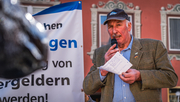
On 20 March 2025, a solemn event in Memmingen looked back at something that took place 500 years ago at this very place: the adoption of the “Twelve Articles” by the so-called “Peasants’ Parliament” of 1525, a ground-breaking document of farmer self-determination and a milestone on the long road to freedom, equality and human rights.
Read more...Dairy cows – a problem or part of the solution?
-
- © Maud Lewis Gashaza
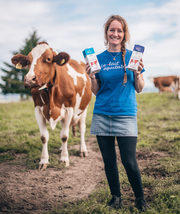
Today, many dairy farmers are suffering because their profession does not get the recognition it deserves. If we want to highlight the value of dairy farming, perhaps we should begin by singing the praise of dairy cows. We need to understand their essential role in our agricultural system and showcase their many contributions. I have therefore decided to give my dairy cows a voice. I interact with them day in day out and they are a part of my life. But I realise that the public at large knows very little about them. So, I will do my best to speak on their behalf.
Read more...Irish dairy sector 2025: record milk output meets rising regulatory costs
-
- © ICMSA, Paul Smyth
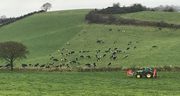
The Irish dairy sector has seen a positive first half of 2025. Weather has been pleasant, with cows able to get to pasture early, and grass growth has been strong over the course of the first six months. Rain has been moderate with a really dry May followed by a much-needed wet spell in June, hence the growth in pastures has been above and beyond 2024 levels.
Read more...EMB: “No to the sell-out of agriculture!”
-

- © ec.europa.eu
On 4 September 2025, the European Milk Board took part in a large protest in Brussels, where numerous organisations from the agricultural, environmental and development sectors jointly expressed their opposition to the planned trade agreement between the EU and the Mercosur countries. For the EMB, it is clear that the Mercosur agreement unilaterally serves the interests of large trade and industrial groups – with serious consequences for European agriculture, the environment and food security.
Read more...MEPs vote in favour of fairer agricultural markets and prices
-
- © AbL
In early September, the Agriculture Committee of the European Parliament adopted a draft opinion on the proposals tabled by the European Commission to amend the Common Market Organisation (CMO). The German family farmers’ association AbL especially welcomes the proposed changes to rules that require mandatory written contracts as they would strengthen the position of farmers in negotiations for fair producer prices.
Read more...From compulsory grazing to CAP reform: issues faced by dairy farmers
-
- © Kunstwerk Media
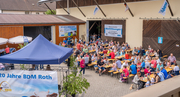
This summer, the German dairy farmers’ association BDM celebrated its 20-year anniversary with summer fests and dairy farmer evenings. Two key events took place in September: the Fair Milk Conference in Dortmund and the Agriculture Ministers Conference in Heidelberg. We are currently gearing up for our symposium, which will be held on 7-8 November in Arnstadt near Erfurt – for the first time outside of the International Green Week. Against this backdrop, setting the political agenda comes strongly into focus.
Read more...European Fair Milk Conference 2025: For fair milk prices across Europe + 15-year anniversary of “Die faire Milch” in Germany
-
- © EMB
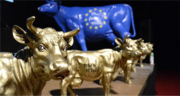
“Die faire Milch” Germany and Boris Gondouin in charge of Fair Milk at the European Milk Board opened this year’s European Fair Milk Conference in Dortmund with a warm welcome. It was a cordial reunion of friends and partners who jointly emphasised the importance of farmers mutually strengthening each other in Europe: “Today, we are celebrating not only Fair Milk, but also our cohesion without which there can’t be any future for our farms”, says Boris Gondouin.
Read more...The main issue of the Swiss dairy market remains unsolved
-
- © Pixabay:fil magic
The Swiss dairy market is plagued by uncertainty: cheese exports are expected to drop due to the tariffs imposed by the United States. What do we do with the milk that we will no longer be able to sell in this way? BIG-M is highly concerned about the interbranch organisation’s decision to offload these milk volumes abroad in the form of butter.
Read more...Denmark’s 80-day Bovaer® mandate: first farm results and road to 2030
-
- © Vanessa Langer
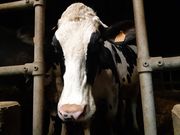
Denmark has introduced mandatory feed-based measures for larger dairy herds in order to curb climate emissions from cows. Turning policy into practice is a real-world test – technically speaking, in rations and routines, and politically across the sector as costs, logistics and acceptance are widely debated.
Read more...Di fair Milch Säuliamt: regionality remains in focus
-

- © Di fair Milch Säuliamt
At Di fair Milch Säuliamt, we are grappling with whether a regional certification like “Suisse Garantie” could help us grow, while taking stock of the many hoops to jump through in order to obtain it. At the same time, we are working on a new product that is sure to delight our customers and consumers.
Read more...EMB General Assembly warns of imminent milk crisis
-
- © EMB, Silvia Däberitz
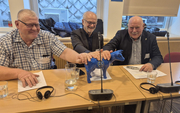
Dairy farmers from across Europe met for the European Milk Board (EMB) General Assembly on 19 and 20 November in Brussels. The high attendance clearly shows that the situation on the dairy market is dire – and coordination across borders is more important than ever before. The milk producers call for EU-wide activation of the voluntary production volume reduction scheme.
Read more...Legal notice
European Milk Board asbl
Rue de la Loi 155
B-1040 Bruxelles
Tel: +32 2808 1935
Fax: +32 2808 8265
E-Mail: office@europeanmilkboard.org
Website: http://www.europeanmilkboard.org