
Newsletter as PDF
Contact
EMB - European Milk Board asbl
Rue de la Loi 155
B-1040 Bruxelles
Tel.: +32 - 2808 - 1935
Fax: +32 - 2808 - 8265
Dear dairy farmers, dear interested parties,

In the lead-up to Christmas, we would like to look back on 2025 and remember the important events with articles that appeared in the EMB newsletter through the year. Europe celebrated important anniversaries in 2025, such as 80 years since the end of World War II. In March 2025, Memmingen commemorated the adoption of the ‘Twelve Articles’ by the Peasants’ Parliament 500 years ago – a milestone on the long road to farmers’ self-determination and justice. At the same time, times are more turbulent than ever: the ongoing war in Ukraine and the crisis in the Middle East, the Trump administration’s trade and tariffs policy with its consequences for markets...
After a comparatively good phase, producer prices for conventional milk are in decline once again. We therefore begin our review of the year with an open letter from the EMB and its member organisations to European Commissioner for Agriculture Christophe Hansen, calling on the European Commission to activate the voluntary production volume reduction scheme.
In 2025, the EMB and its member organisations continued to fight tirelessly for fairer remuneration of producers and the survival of family farms in Europe through a wide range of campaigns. They organised events and attended trade fairs such as SIA in Paris and the International Green Week in Berlin. They met with national and European policy-makers, contributed to the debate on the future of the Common Agricultural Policy (CAP), the reform of the Common Market Organisation (CMO) and the Multiannual Financial Framework (MFF), and took part in protests, for example against the Mercosur free trade agreement.
Although producer prices covered costs more often this year than in previous years, the EMB and its member organisations never tired of emphasising that the fundamental problems plaguing the dairy sector remain unresolved and must finally be addressed.
On a positive note, there was a noticeable shift in thinking at the EU institutions this year, with the European Parliament recognising the importance of fair framework conditions for agriculture. In a vote on a report about the European Commission’s proposals for amendments to the CMO, the majority of MEPs adopted a progressive vision. This report aims to strengthen the position of producers in the food chain – an important first step towards fairer markets.
Many of our member organisations reported on their problems and the lack of prospects for the dairy sector in the year that was. Legislative changes mean new requirements that lead to extra costs and cause uncertainty: the reform of the CMO, the CAP post 2027, the EU regulation on nature restoration, grazing requirements, the re-application and extension of its nitrates’ derogation in Ireland, the introduction of Bovaer® in Denmark, a possible revision of the Green Deal, to name but a few.
Although our Swiss member organisations are not part of the European Union, they also complain that the fundamental problems of the Swiss dairy sector remain unresolved. Our members Uniterre and BIG-M have called for a comprehensive reform of the Swiss dairy interbranch organisation (IP Lait).
In addition to the political framework, the economic parameters for many milk producers are also changing. The merger of Arla and DMK will create a cooperative giant – a development that many producers and their organisations view critically.
In this difficult environment, our Fair Milk projects showed yet again in 2025 that fairer producer prices are possible. At the Fair Milk Conference, people who have made a special contribution to the cause of dairy farmers were once again honoured, and the fifteenth anniversary of Germany’s Die faire Milch was celebrated.
The newsletter was also a space for critical reflections. The article by Faireswiss dealt with methane emissions from dairy cows and examined whether they are a harmful factor or part of the solution.
In these complex times, we wish you a peaceful Christmas and health, happiness and perseverance for the New Year. Recharge your batteries and gather your strength – the fight for cost-covering milk prices and fair conditions will enter its next round in 2026.
Your EMB team

Open letter from EMB and its member organisations to the European Commission: urgent activation of voluntary volume reduction!
-

- © European Union: Christophe Hansen
Dear Mr Hansen,
Europe is on the brink of another potentially devastating crisis in the dairy sector. In many Member States, milk producers are currently witnessing a sharp and accelerating drop in prices. Numerous farms – especially family farms – now face immediate threats to their existence.
Fairkoperativ meets with new European Commissioner for Agriculture
-
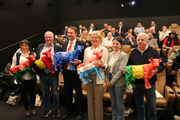
- © D’fair Mëllech: Pit Bosseler
On 13 January, Fairkoperativ, a cooperative of dairy farmers in Luxembourg, hosted Minister of Agriculture Martine Hansen and the new European Commissioner for Agriculture, Christophe Hansen, for a screening of the documentary “Trainée de poudre”.
Read more...Germany: Die faire Milch at the vanguard
-
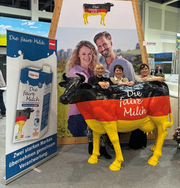
- © LANUV NRW
The German Fair Milk brand, Die Faire Milch, is considered a pioneer in milk production and the German dairy sector as it places regional milk products and sustainability at the heart of their model. The latest edition of their newsletter provides fascinating insights into the Berlin International Green Week as well as the awards ceremony recognising “regional stars”. Here are some of the highlights.
Read more...Ireland and dairy policy perspectives in 2025
-
- © ICMSA
As the new year has rolled in and farmers have settled back into our spring calving pattern, where we calve most of our cows in February and March to coincide with our grass-grazing season, Irish farmers have many thoughts on their minds – much more than the impending arrival of calves and damage from the latest storm. Here are the main issues concerning the members of ICMSA for the coming year.
Read more...MIG calls for a joint mobilisation at European level: the only way to make our voice heard against the nefarious EU-Mercosur agreement
-
- © MIG
Alongside several Walloon and European agricultural organisations, MIG is taking a firm stance against the free-trade agreement between the European Union and the Mercosur countries. This agreement poses a direct threat to agriculture, the environment and food security in Europe by nullifying all sustainability efforts.
Read more...EMB at SIA: From Paris with love
-
- © EMB
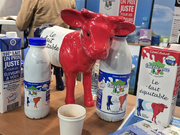
While the halls of the French agricultural show SIA were filled with thousands of discussions, the committed colleagues from FaireFrance served Fair Milk to numerous visitors and welcomed EMB representatives to their stand.
Read more...Arla/DMK merger creates new cooperative giant
-
- © EMB
EMB statement: “We have to talk about cooperatives! What cooperatives are – what they are not – and what they pretend to be!”
With the planned merger of Arla Foods and the DMK Group and an estimated combined pro forma revenue of 19 billion euros, a new cooperative giant will soon be on the market.
EMB President Kjartan Poulsen, himself an Arla member, sees this as yet another step in the move towards ever larger, highly branched structures, which is all too familiar in the sector. As a result, and for a long time now, cooperatives have ceased to be the representatives of producer interests they claim to be on paper: “Cooperatives have a positive ring to them in the public perception: structures based on community, democracy and solidarity. They are seen as a counter-model to profit-oriented corporations and as economic support for farmers. But this image needs an urgent update – especially because cooperatives in their current form neither live up to their responsibility nor to their self-proclaimed standards”, says Poulsen.
1. What are cooperatives in theory?
At their core, cooperatives are associations of people with common economic interests. Members make a financial contribution and, at the same time, should be able to participate democratically. The primary goal is to support the economic situation of members, not profit maximisation.
2. What cooperatives are not
Cooperatives are not mere service providers or corporations. Their role is not to simply buy raw materials cheaply and process them profitably – they must act in the interest of their members. They are not an end in themselves. But this is exactly where the problem begins.
3. The third category: what cooperatives pretend to be – to evade obligations
Cooperatives like to present themselves as democratic, solidarity-based stakeholders to evade several legal and political obligations. For example: mandatory contracts between agricultural producers and processors are currently being discussed at EU level – an instrument for creating fair and transparent price structures. Cooperatives regularly demand exceptions to this obligation. Cooperative members are also denied a better position in negotiations as they cannot be represented by producer organisations. Cooperatives present the following reasoning: as they are a community of producers, there is no need for additional regulations here.
But this does not correspond to reality.
⇒ Reality: membership without power
The actual balance of power in many cooperatives is asymmetrical. Individual members have neither the legal or economic knowledge nor the time or structural resources to really shape decision-making processes. Many cooperatives have become very large and highly branched over time and are not run by members, but by a management team. Members are often only involved via representative assemblies. Crucial lines of business – such as marketing – are often outsourced, making control even more difficult. The possibility for the member base to exert influence is minimal. In addition, there is economic dependence: many farmers are dependent on their cooperative as a buyer – criticism threatens their livelihood. This leads to a systematic weakening of democracy within cooperatives. What remains is a façade of democratic participation – not a lived reality.
⇒ Contradiction in the business model
A particularly clear conflict of interest is evident in the dairy sector. Cooperative dairies act on the market as processors and sellers. Their interest is therefore in procuring the cheapest possible raw materials – i.e. low milk prices. At the same time, they should be fighting for good producer prices in the interest of their members. These goals are fundamentally contradictory. If cooperatives act as market players, they must also be treated and regulated as such.
Cooperatives cover large market shares – in many places they are the main buyer. The new cooperative giant that Arla and DMK are currently creating is a prime example of this. So, if cooperatives are exempted from contractual obligations, this means that a large part of the market and thus the problem is not covered. Fair prices and transparent contracts remain an illusion – at the expense of producers.
⇒ What are cooperatives afraid of?
Why do cooperatives resist clear rules that are supposed to promote fairness and transparency? Perhaps because they would then have to disclose that their role as supposed representatives of members’ interests has long since been undermined. The fear lies in the disclosure of a power imbalance that contradicts the cooperative ideal. “We have to talk about cooperatives – openly, honestly and without ideological blinkers. They are important players, but not saints. Anyone who behaves like a company must also be treated like one. This is especially true when it comes to fair prices, market transparency and political responsibility”, says Kjartan Poulsen.
In concrete terms, this means:
The obligation to conclude contracts between producers and buyers, which has currently been put on the table by the European Commission, must apply to cooperatives in the same way as to any other processor.
Cooperative members must have the possibility to be represented by producer organisations in negotiations with processors.
The size thresholds for these producer organisations must be increased to keep up with market shares of processors. Currently, such organisations are restricted to 4% of the EU market and 33% of national volumes. It should be increased to 30% for the EU and pooling limits should be abolished altogether at national level, to make it possible to negotiate with processors on an equal footing.
For detailed information on the development of cooperatives, see also Cooperatives – Between Myth and Reality.
EMB press release of 9 April 2025
Uniterre, BIG-M, BBK and BZS call for a sweeping reform of IP Lait
-

- © Uniterre, BIG-M, BBK and BZS
Multiple Swiss farmers’ organisations have called into question the role and legitimacy of the interbranch organisation IP Lait through a parliamentary motion. Their demand: a fairer governance system, more transparency in contracts, and milk prices aligned with production costs.
Read more...Faireswiss: a solution that addresses low dairy farmer income
-
- © Maud Lewis Gashaza
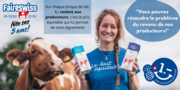
The Faireswiss cooperative markets Fair Milk in Switzerland that makes it possible to pay 1 Swiss franc per litre to its dairy farmers.
Read more...The dairy sector and the future (of the) Green Deal
-

- © EMB, Roberto Cavaliere
While a potential revision of the European Green Deal offers both challenges and opportunities, the possible – positive and negative – impacts on the dairy sector would be significant. Producers could face higher costs as a result of adopting greener practices, investing in sustainable technologies, and meeting stricter regulations.
Read more...Swedish dairy farmers at a crossroads
-
- © Ulrik Isleborn
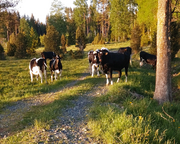
The milk price is currently acceptable for most Swedish producers. A few dairies are unable to match the price offered by the market leader, but there is a general hope among farmers that milk prices will at least remain at their current level.
Read more...European Milk Board: European General Assembly
-
- © EMB
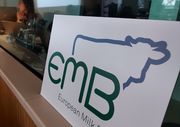
At the latest EMB General Assembly, member organisations from numerous European countries met to discuss the key challenges faced by the dairy sector. Everyone agreed: even if farmers are now paid cost-covering farm-gate prices more often than before - i.e. we have made progress in achieving one of the EMB’s goals – the fundamental issues plaguing the dairy sector persist and they must be addressed NOW. It is time to stop farms from going out of business – European dairy farmers demand rigorous reforms for future-proof agriculture.
Read more...500 years since the German Great Peasants’ War: the Twelve Articles today from the farmer perspective
-
- © BDM
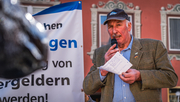
On 20 March 2025, a solemn event in Memmingen looked back at something that took place 500 years ago at this very place: the adoption of the “Twelve Articles” by the so-called “Peasants’ Parliament” of 1525, a ground-breaking document of farmer self-determination and a milestone on the long road to freedom, equality and human rights.
Read more...Dairy cows – a problem or part of the solution?
-
- © Maud Lewis Gashaza
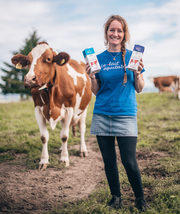
Today, many dairy farmers are suffering because their profession does not get the recognition it deserves. If we want to highlight the value of dairy farming, perhaps we should begin by singing the praise of dairy cows. We need to understand their essential role in our agricultural system and showcase their many contributions. I have therefore decided to give my dairy cows a voice. I interact with them day in day out and they are a part of my life. But I realise that the public at large knows very little about them. So, I will do my best to speak on their behalf.
Read more...Irish dairy sector 2025: record milk output meets rising regulatory costs
-
- © ICMSA, Paul Smyth
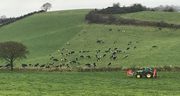
The Irish dairy sector has seen a positive first half of 2025. Weather has been pleasant, with cows able to get to pasture early, and grass growth has been strong over the course of the first six months. Rain has been moderate with a really dry May followed by a much-needed wet spell in June, hence the growth in pastures has been above and beyond 2024 levels.
Read more...EMB: “No to the sell-out of agriculture!”
-

- © ec.europa.eu
On 4 September 2025, the European Milk Board took part in a large protest in Brussels, where numerous organisations from the agricultural, environmental and development sectors jointly expressed their opposition to the planned trade agreement between the EU and the Mercosur countries. For the EMB, it is clear that the Mercosur agreement unilaterally serves the interests of large trade and industrial groups – with serious consequences for European agriculture, the environment and food security.
Read more...MEPs vote in favour of fairer agricultural markets and prices
-
- © AbL
In early September, the Agriculture Committee of the European Parliament adopted a draft opinion on the proposals tabled by the European Commission to amend the Common Market Organisation (CMO). The German family farmers’ association AbL especially welcomes the proposed changes to rules that require mandatory written contracts as they would strengthen the position of farmers in negotiations for fair producer prices.
Read more...From compulsory grazing to CAP reform: issues faced by dairy farmers
-
- © Kunstwerk Media
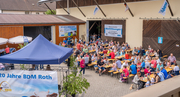
This summer, the German dairy farmers’ association BDM celebrated its 20-year anniversary with summer fests and dairy farmer evenings. Two key events took place in September: the Fair Milk Conference in Dortmund and the Agriculture Ministers Conference in Heidelberg. We are currently gearing up for our symposium, which will be held on 7-8 November in Arnstadt near Erfurt – for the first time outside of the International Green Week. Against this backdrop, setting the political agenda comes strongly into focus.
Read more...European Fair Milk Conference 2025: For fair milk prices across Europe + 15-year anniversary of “Die faire Milch” in Germany
-

- © EMB
“Die faire Milch” Germany and Boris Gondouin in charge of Fair Milk at the European Milk Board opened this year’s European Fair Milk Conference in Dortmund with a warm welcome. It was a cordial reunion of friends and partners who jointly emphasised the importance of farmers mutually strengthening each other in Europe: “Today, we are celebrating not only Fair Milk, but also our cohesion without which there can’t be any future for our farms”, says Boris Gondouin.
Read more...The main issue of the Swiss dairy market remains unsolved
-
- © Pixabay:fil magic
The Swiss dairy market is plagued by uncertainty: cheese exports are expected to drop due to the tariffs imposed by the United States. What do we do with the milk that we will no longer be able to sell in this way? BIG-M is highly concerned about the interbranch organisation’s decision to offload these milk volumes abroad in the form of butter.
Read more...Denmark’s 80-day Bovaer® mandate: first farm results and road to 2030
-
- © Vanessa Langer
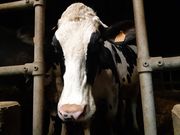
Denmark has introduced mandatory feed-based measures for larger dairy herds in order to curb climate emissions from cows. Turning policy into practice is a real-world test – technically speaking, in rations and routines, and politically across the sector as costs, logistics and acceptance are widely debated.
Read more...Di fair Milch Säuliamt: regionality remains in focus
-

- © Di fair Milch Säuliamt
At Di fair Milch Säuliamt, we are grappling with whether a regional certification like “Suisse Garantie” could help us grow, while taking stock of the many hoops to jump through in order to obtain it. At the same time, we are working on a new product that is sure to delight our customers and consumers.
Read more...EMB General Assembly warns of imminent milk crisis
-
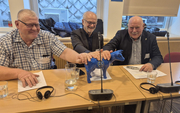
- © EMB, Silvia Däberitz
Dairy farmers from across Europe met for the European Milk Board (EMB) General Assembly on 19 and 20 November in Brussels. The high attendance clearly shows that the situation on the dairy market is dire – and coordination across borders is more important than ever before. The milk producers call for EU-wide activation of the voluntary production volume reduction scheme.
Read more...Legal notice
European Milk Board asbl
Rue de la Loi 155
B-1040 Bruxelles
Tel: +32 2808 1935
Fax: +32 2808 8265
E-Mail: office@europeanmilkboard.org
Website: http://www.europeanmilkboard.org