Newsletter as PDF
Contact
EMB - European Milk Board asbl
Rue de la Loi 155
B-1040 Bruxelles
Tel.: +32 - 2808 - 1935
Fax: +32 - 2808 - 8265
Dear dairy farmers, dear interested parties,
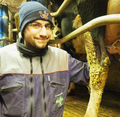
The innovative economic model of Fair Milk is making waves. We presented the concept again during many interactions at the Paris International Agricultural Show (SIA). FaireFrance, the French Fair Milk brand that has been on the market for almost 13 years, is regarded with much interest. National media is also taking notice with more frequent features, especially on the eight o’ clock news on TF1 and France 2.
As difficult trade negotiations come to close in France, the Fair Milk model remains one worth emulating. It is quite simple: everyone receives the same farm-gate price, and the guaranteed producer remuneration reassures distributors and consumers who, in turn, also enjoy a fair price that is not necessarily much higher when compared with other products of similar quality.
In addition to being innovative in terms of price formation and the position of dairy farmers viz a viz other stakeholders in the value chain, the Fair Milk model also offers farmers, especially young farmers, long-term prospects with guaranteed remuneration. That is what motivated me to join and today, FaireFrance is a shining example because it clearly works. In 2024, we sold almost 18 million units of our products, which allowed us to pay 58 cents per litre to the participating producers.
The advantages of the Fair Milk model
FaireFrance, like the similar initiatives in Germany, Switzerland, Italy, Luxembourg and Belgium, adopts an innovative approach that places producers at the heart of the value chain. Thanks to this model, they are no longer mere suppliers of raw materials, they are real producers and traders. In this way, they interact directly with all links in the value chain: processors to make their products, large and mid-sized retailers for distribution, and, most importantly, consumers, who are at the end of the value chain and play a key role in the development of our model.
The FaireFrance experience of being at the centre of negotiations with each party allows us to talk about the challenges that producers must deal with and to create awareness among all stakeholders in the sector. It especially highlights the importance of fair remuneration for producers and fair distribution of profit margins among all players with the aim of fair and affordable prices for consumers. It is a win-win model that is beneficial to all.
Adrien Lefèvre, Board member of FaireFrance
Germany: Die faire Milch at the vanguard
-
- © LANUV NRW
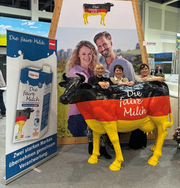
The German Fair Milk brand, Die Faire Milch, is considered a pioneer in milk production and the German dairy sector as it places regional milk products and sustainability at the heart of their model. The latest edition of their newsletter provides fascinating insights into the Berlin International Green Week as well as the awards ceremony recognising “regional stars”. Here are some of the highlights.
Read more...Faireswiss: a solution that addresses low dairy farmer income
-
- © Lewis Gashaza
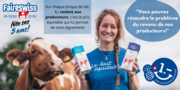
The Faireswiss cooperative markets Fair Milk in Switzerland that makes it possible to pay 1 Swiss franc per litre to its dairy farmers.
Based on the results of a centralised survey, Agroscope published agricultural revenues in late 2024: the average income in the dairy farming sector was 15 francs per hour in 2023. This is unbelievably low compared to the rest of the economy where wages were 42 francs per hour in 2023. As a result, Swiss milk production lost more than 50% of its producers in less than 30 years: we had 44,000 farmers in 1996; they numbered 16,759 at the end of 2024.
Against the backdrop of this dramatic situation, Faireswiss and their Fair Milk model is on the scene with a solution to improve dairy farmer income! While the current average price paid to producers is 70 centimes, Faireswiss pays 1 CHF per litre of milk, which largely allows to cover production costs.
Faireswiss is a cooperative of 75 milk producers distributed across Switzerland. It was created in June 2018 and the first carton of milk was sold in late September 2019 thanks to our first partner Manor. Since then, other retailers have joined the adventure: PAM and Edelweiss in Valais, Aligro, some Spar stores, and since 2024, Aldi stores in Romandy (the French-speaking part of Switzerland) and the cantons of Berne and Solothurn. Our milk is also sold in many local grocery stores as well as in collective catering establishments. For example, all the canteens operated by the city of Lausanne as well as the Vaud university hospital (CHUV) exclusively use Fair Milk. All in all, we have about 500 points of sale in Switzerland with most in the French-speaking part of Switzerland.
To join the Faireswiss cooperative, milk producers must commit to at least two of the three animal welfare and sustainability programmes in terms of animal feed: grassland-based milk and meat production (GMM), regular outdoor exercise for livestock (ROEL) and particularly animal-friendly stabling systems (PAS). Producers must also participate in outreach activities in shops or at events. It is very important for us at Faireswiss to be in contact with consumers, to make them understand the reality of milk production in Switzerland, to show them how essential it is to keep dairy farming in Switzerland as 70% of our agricultural land is grassland, and unlike ruminants, humankind cannot digest grass and it has no nutritional value to us.
Since the beginning of the project, we have sold 7.5 million litres of milk, with an average 1.6 million litres annually in recent years. We have also paid 2.4 million francs to the Faireswiss cooperative members since 2019. While it is true that Faireswiss is just a drop in the dairy ocean of 3.3 billion litres of milk produced every year, our project remains a beacon of hope for the sector. We wish more big retailers would play their part in making Faireswiss milk available to their consumers who should have a choice in stores. Despite our steady growth, the slow increase in sales means that we are unfortunately unable to admit new producers to the cooperative. And we have 120 producers on the waiting list! At the end of the day, if each inhabitant of Switzerland bought one litre of Fair Milk per month, this would mean an additional 6 francs per year and per inhabitant. And this can be life-changing for Swiss dairy farmers!
We invite you to consult the map with our points of sale or to visit our website (both available in German, French and Italian).
Thank you for supporting Swiss dairy farmers!
Berthe Darras, head of the Dairy Committee at Uniterre
Di fair Milch Säuliamt: regionality remains in focus
-

- © Di fair Milch Säuliamt
At Di fair Milch Säuliamt, we are grappling with whether a regional certification like “Suisse Garantie” could help us grow, while taking stock of the many hoops to jump through in order to obtain it. At the same time, we are working on a new product that is sure to delight our customers and consumers.
Read more...EMB at SIA: From Paris with love
-
- © EMB
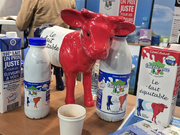
While the halls of the French agricultural show SIA were filled with thousands of discussions, the committed colleagues from FaireFrance served Fair Milk to numerous visitors and welcomed EMB representatives to their stand.
Read more...Legal notice
European Milk Board asbl
Rue de la Loi 155
B-1040 Bruxelles
Tel: +32 2808 1935
Fax: +32 2808 8265
E-Mail: office@europeanmilkboard.org
Website: http://www.europeanmilkboard.org