
Newsletter as PDF
Contact
EMB - European Milk Board asbl
Rue de la Loi 155
B-1040 Bruxelles
Tel.: +32 - 2808 - 1935
Fax: +32 - 2808 - 8265
Dear dairy farmers, dear interested parties,

Given the current situation, things could be better on our dairy farms. The outbreak of the bluetongue disease affecting some Member States is serious. It is outrageous that a country like Belgium did not see this coming, when the disease was already detected in the Netherlands in May 2024. In my opinion, the authorities are to blame. Launching a vaccination campaign late in the day makes no sense. After this failure, and given that the epizootic hemorrhagic disease virus (EHDV) has already been detected in France, the authorities are trying to get ahead of the situation. The vaccine should be available on our farms in November. The losses have been significant, and the Walloon Ministry for Agriculture has already released a sizeable package of funds for the affected farms. The article in this edition of the newsletter on the situation of Belgian dairy farmers describes bluetongue’s devastating impact on the sector. Unfortunately, producers’ concerns do not stop with this epidemic, as other threats are emerging on the horizon.
According to a Greenpeace study, the current situation is alarming for those of us that defend family farming. The number of industrial mega-farms has increased by 56% between 2007 and 2022. In 15 years, Europe has lost two million small-scale commercial farms, and 40% of European economic output now comes from these mega-farms that represent 8% of the sector and receive 37% of agricultural subsidies.
Against this backdrop, it is clear that the EMB has always been a pioneer with its vision to produce less but better, while adequately remunerating farmers. It is about producing more sustainably with shorter supply chains and specifically rejecting what Lactalis, for example, is proposing as of January next year: reducing their milk collection by 450 million litres because they have found a loophole that allows them to import milk from Eastern countries. This milk is then packaged and labelled “Made in France”, giving producers the wrong impression that this is a local product. This would qualify as an unfair trading practice, wouldn’t it?
Our organisation should also be participating in the upcoming discussions regarding the incoming Commissioner for Agriculture, Christophe Hansen, about his vision of agriculture and food, the future of the CAP, the impact of enlargement to Ukraine, crisis management, support for the green transition and livestock farming. In this edition, you will find more detailed information about the designated Commissioner for Agriculture and the aspects that are still missing in the recommendations of the Strategic Dialogue on the future of EU agriculture.
The further we get, the more I realise how important it is for us to defend our EMB and our respective Fair Milk projects, at all costs. This keeps my motivation at 200%. We have celebrated the 15-year anniversary of our Fair Milk brand Fairebel on 29 October. It feels like it was just yesterday... but in the meantime, I look back on 15 years filled with beautiful shared experiences.
Looking forward to seeing you all,
Yours truly at the EMB, MIG and Fairebel
Guy Francq, EMB Executive Committee member
EMB congratulates Belgium’s Fairebel on its 15-year anniversary
-
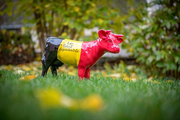
- © Fairebel
The Belgian Fairebel celebrates its 15-year anniversary this year. What began as an ambitious project is now a well-established success – thanks to the strong commitment of the participating farmers. “Farmers have created something special that is pioneering beyond the agricultural sector and above all, offers great benefits for everyone.”
Read more...Fairebel celebrates 15 years of commitment to local and fair trade
-
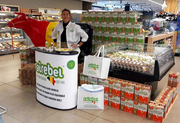
- © Fairebel
In October 2024, Fairebel, the pioneering Belgian Fair Milk brand, celebrates a decade and a half of striving for local and fair agriculture. Founded in 2009 by a group of farmers, Fairebel has become more than just a milk brand: it symbolises resilience and solidarity within the Belgian agricultural sector. Today, Fairebel continues to grow, representing over 500 producers who have come together to offer quality products while, at the same time, guaranteeing that each and every one of them is fairly remunerated. This ensures future prospects for the young farmers who are members of the cooperative.
Read more...EMB welcomes pioneering Fair Milk project with PENNY in Germany
-
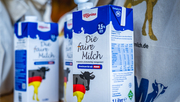
- © Die faire Milch and PENNY
The European Milk Board asbl (EMB) welcomes the new project between the German Fair Milk, Die faire Milch, and PENNY that has been officially presented today. In a new type of tripartite agreement, PENNY as the retailer, Die faire Milch as the supplier and producer cooperative Fair Food have formalised their joint effort to bring transparency and fairness to calculations and price setting in the value chain.
Read more...A new Commissioner for Agriculture for a new agricultural policy?
-

- © European Commission
For the next few years, Christophe Hansen from Luxembourg is set to hold the reins of agricultural policy in the EU. The EPP politician (European People’s Party), who was already an MEP, is an environmental and geoscientist and comes from a farming family.
Read more...New EU Commissioner for Agriculture should take into account: Recommendations in the Strategic Dialogue still lacking important aspects
-
- © European Commission
The President of the European Commission, Ursula von der Leyen, has announced her list of candidates for the new EU Commission. She would like to see Christophe Hansen as the new Commissioner for Agriculture, who would be substantially responsible for implementing the recommendations of the Strategic Dialogue on the Future of EU Agriculture. The most recent document of the Strategic Dialogue addresses key points, but important aspects for a successful sectoral transformation are still missing. The new EU Commissioner should absolutely take this into account when implementing the recommendations of the dialogue.
Read more...European farmers and agri-food workers demand prices that cover production costs be urgently included in the UTP Directive
-
- © ECVC, EFFAT and EMB
In an open letter sent on 7 October 2024 to the President of the European Commission, the President of the Agrifish Council and the President of the European Parliament, European farmer and agri-food worker organisations have demanded a fast-track procedure be initiated by the end of the year to add purchasing agricultural and food products under the cost of production to the Unfair Trading Practices Directive black list.
AbL demands market policy framework for prices that cover costs
-

- © AbL
As a result of the farmers’ protests, EU Commission President Ursula von der Leyen felt obliged to make the following statement at the European Parliament Plenary when presenting her political priorities as a candidate for a second term of office: “No one should be forced to sell good food below production costs.” We shall keep a critical eye on how serious she will be about putting this into effect. But on the EU level, a more progressive mood is already obvious in terms of market policy, while Germany still has a long way to go to reach the point where prices cover costs.
Read more...Northern Ireland Farm Welfare Bill
-
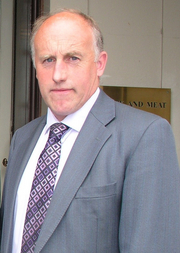
- © William Taylor
Farmers For Action UK NI have connections with EMB that date back to its origins. We are very grateful for this opportunity to connect with EMB members and everything EMB is trying to achieve, which is an extremely difficult process, against bureaucracy and the corporate food industry. Over recent years, we have worked on a legislative bill to ensure cost-covering farm-gate prices for farmers. In 2013, we set about bringing farm organisations in Northern Ireland together under Northern Ireland Farm Groups to work on a legislation bill on farm-gate prices to return to farmers a minimum of the true and inflation-adjusted cost of production plus a margin.
Read more...Belgium: bluetongue has major impact, plus other threats on the horizon
-
- © MIG
In August and September 2024, MIG conducted two surveys among its members to evaluate the impact of the bluetongue disease on dairy farms in Wallonia. These surveys show that things are clearly getting worse, with a rapid spread of the disease, loss of livestock and a drop in milk production.
Read more...Bird’s-eye view for the Agricultural Ministers’ Conference – BDM with a hot-air balloon on a crane in Oberhof
-
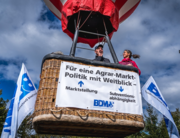
- © BDM
You couldn’t miss it: on 12 September, the BDM rolled up at the Agricultural Ministers’ Conference with a 650-tonne mobile crane with an axle load of 12 tonnes, proclaiming its message for all to see: we must tackle the big issues! To give the ministers and their chiefs of staff attending the conference an idea of what these big issues are, we invited them to get a “bird’s-eye rather than frog’s-eye view for the urgently needed realignment of agricultural policy” from a height of 60 metres in the basket – for a symbolic and real overview with an opportunity for political discussions at the same time.
The background to our stunt is the awareness that even after the massive farmers’ protests, many aspects of agricultural policy remain bogged down in details, and that there simply isn’t the political courage or determination to go ahead with the urgently needed fundamental changes, despite the clear message that the protests gave. Yes, there’s a great need to reduce the exploding, excessive red tape – but that alone isn’t enough to offer the farmers an economic perspective for the future. The issues at stake go way beyond state transfer payments (= taxpayers’ money), which always involve complicated bureaucratic procedures. What is needed is further development of the Common Market Organisation, putting agriculture in a position to give farms economic prospects. This is the only way to succeed with the much discussed “transformation of agriculture” that is deemed necessary.
Visitors from the other federal states
The BDM stunt was well received by visitors from Lower Saxony, the Saarland, Brandenburg, Thuringia and Mecklenburg-Vorpommern, where the BDM proposals have been looked at in great detail. Here the ministers and undersecretaries certainly proved to be resilient to the weather, which they needed to be, at temperatures of 5 to 9° C and short, cold showers. The Thuringian host Minister Susanna Karawanskij and her undersecretary Torsten Weil proved to be particularly weather-proof and didn’t let the heavy showers put them off being lifted up to airy heights in the basket. The only CDU (Christian Democratic Union) minister who showed any interest in a brief opportunity to talk about things was from Saxony-Anhalt, remaining true to his general willingness to discuss matters, which we have already seen in the past.
As in Erfurt, the Thuringian branch of the Farmers’ Union accompanied the Agricultural Ministers’ Conference with a “forest” of banners showing 194 demands for cutting the red tape. The demands were fastened to balloons and released into the sky. Although these demands were right for the most part, it must be said that the type of agricultural policy being pursued by the Farmers’ Union, consisting primarily of obtaining public money hand-outs, almost automatically leads to more bureaucracy. Since the Covid-19 pandemic, this is something that many people who have nothing to do with agriculture but were forced to apply for public assistance now know about, too.
The Farmer’s Union is also trying to prevent moves towards a contractual obligation between dairies and dairy farmers with the killer argument of even more red tape, despite the fact that contracts are standard practice elsewhere in the business world. Nobody would ever think of rejecting contracts as meaning too much red tape. The same association that is so politically virulent in demanding a reduction in bureaucracy has no scruples when the quality assurance system QM Milch keeps on extending its requirements and thus also the amount of red tape involved.
The BDM input at the start of the Agricultural Ministers’ Conference was very clear:
Our message to all ministers
This time we have deliberately not gone into detailed explanations of our well-known demands, such as improving the market position for farmers or creating a safety net for the agricultural markets. “Business as usual” is no longer an option, because this has made the market distorted; farmers have become dependent on subsidies and environmental damage has been caused, while farming is losing its appeal to the younger generation. For the BDM, it is clear that the future alignment of EU agricultural policy plays a crucial role in facilitating sustainable development of farms. The urgently needed fundamental reforms mean that the ongoing discussions about the next multiannual financial framework, which will come into effect at the earliest in 2028, must be held in good time.
We think it is necessary for the agricultural subsidies in the framework of the CAP 2028 to be tied consistently to specific criteria and services in the context of protecting the environment, the climate and nature, instead of maintaining a considerable share of the funds as a “basic payment”. Given the tight public budgets, these could be more vulnerable than funding that is tied to specific requirements. More money must be made available to the agricultural sector, regardless of how agricultural subsidies are designed in future. The structuring of the Common Market Organisation within the CAP is an important lever to safeguard economic prospects for farms. Refinancing investment in animal welfare measures should be possible within ten years, in the interests of greater planning certainty.
More than 30 associations have joined forces to draw up a position statement with the heading “Shaping future: Working together for a resilient, greener and fairer farming sector and agricultural policy”, explicitly supporting the necessity for farmers to be able to generate their main income through the market. Public funds for more ecological services must be conditional on farmers having a sustainable livelihood. We see these proposals as forming the basis for political work also in the individual German federal states.
Furthermore, we also gave the ministers two other urgent issues to think about. Among others, the economic and psychological stress caused by the spread of the bluetongue disease necessitates financial support for the farms that are affected. We also proposed the introduction of an additional eco-scheme for the preservation of long-term permanent grassland, given the scientifically verified significant role that this plays in climate protection, seeing that pasture grazing of dairy cattle is not feasible for all farms!
Associations’ meeting bogged down in detail
At the latest during the associations’ meeting, held traditionally on the Thursday of the Agricultural Ministers’ Conference, it once again became clear that the large number of different associations results in the discussions getting bogged down in detail, because everyone wants to use the opportunity to bring forth their own specific concerns. Not much that’s new, but a lot that’s very familiar: cutting the red tape, expanding the pilot farm network, using drones, funding for reforestation etc. – all important topics that affect us, and which are being addressed, and rightly so, by many agricultural stakeholders. These topics took up a lot of time during the associations’ meeting held at the start of the Agricultural Ministers’ Conference, so that the association representatives didn’t spend long enough taking a broader view. Is it really useful for such a large conference to deal with far too many detailed aspects instead of talking about the bigger picture?
Let’s say it again: red tape, official requirements and so on haven’t come out of the blue, but originate from the wrong alignment of agricultural policy. NOW is the time to change this. We’ll stay on the ball!
Johannes Fritz, Bundesverband Deutscher Milchviehhalter e.V. (BDM)
Dickybird in Hamburg
-
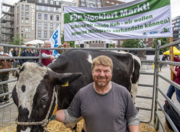
- © AbL
For a change, this time we are including a funny short story by Matthias Stührwoldt, who is well-known for his witty, lively tales of life down on the farm. This article, originally published in the “Bauernstimme” mouthpiece of the AbL, tells of a very special protest in Hamburg – with a cow named Dickybird!
Legal notice
European Milk Board asbl
Rue de la Loi 155
B-1040 Bruxelles
Tel: +32 2808 1935
Fax: +32 2808 8265
E-Mail: office@europeanmilkboard.org
Website: http://www.europeanmilkboard.org