Newsletter as PDF
Contact
EMB - European Milk Board asbl
Rue de la Loi 155
B-1040 Bruxelles
Tel.: +32 - 2808 - 1935
Fax: +32 - 2808 - 8265
Dear dairy farmers, dear interested parties,
Since the EMB was founded fifteen years ago, we have been struggling – sometimes more, sometimes less successfully – to generate a revenue that would allow us and our families a decent life. 2022 was a better year – despite the fact that our production costs sky-rocketed. In Belgium, we had farm-gate prices of almost 60 cents per litre. Why is it then that over four months, this price paid to producers has fallen by 30% and is now at 36 cents per litre? While it is true that our price is closely linked to butter and milk powder exports, they have reduced by only 10% (4,564 euros/t for butter, 3,375 euros/t for milk powder). Something doesn’t add up.
At the recent milk producer fair in Battice, MIG used its traditional bottle of milk to show that there was a cost coverage shortfall of 8.4 cents per kilo in the second quarter of 2023 (see MIG article below).
The closer we get to the fateful date of 2030 under the Green Deal, the clearer it is becoming that milk and meat represent half the agricultural production value in Belgium. However, over the last two decades, the dairy herd has shrunk by 30%, the number of farmers has reduced by more than 60% and farmer income is inadequate and unstable. Furthermore, the many challenges raise real questions about the future of livestock farming: climate change, animal welfare, biodiversity protection and preserving landscapes...
With so many open issues, the future of our farms is uncertain. Do we need to champion productivism and implement new technologies? Should we highlight the quality of our products? Should we focus on feed autonomy, on-farm processing, the creation of real producer cooperatives that work to establish Fair Milk projects in their countries? What repercussions will these changes have on our profession as livestock and dairy farmers?
In Belgium, MIG participated in a public survey looking to decode the expectations and difficulties faced by young people entering the farming sector. I think that our different countries across Europe are facing the same issues. Generational renewal and passing on farms are the biggest concerns in the agricultural sector. I think these two striking figures illustrate my point: 68% of farmers are over 50 years old and only 22% know who will take over from them. When talking about the future of our farms, perhaps the EMB should call on the European Commission to set a cap on how much agricultural land industry giants can acquire, so that they can no longer grab our lands while claiming that they themselves have become farmers (some even claim to be ACTIVE farmers) and are now eligible for CAP subsidies. I would like to mention the agricultural land grabbing in Germany by Aldi (more than 30,000 hectares) as well as in Belgium by the Colruyt group. But there are many other examples out there of financial models that have nothing to do with primary agricultural production.
It is our duty to put an end to this immediately if we want our profession to be upheld in its entirety as we know it today. Let’s remain committed and show civil society that with their support, we can take things in our own hands and offer sustainable, fair, viable and eco-friendly agriculture that protects the environment for our future generations.
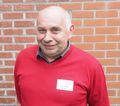
Guy Francq, member of the EMB Executive Committee
8th European Fair Milk Conference celebrates the commitment of farmers and honours contributions to social sustainability
-
- © EMB
Something that should be commonplace in the dairy market has in fact become a rare sensation: for a few years now, Fair Milk has made it possible for farmers to earn a decent living. This brand founded in 2006 in Austria now puts socially sustainable products on supermarket shelves for consumers. At the Fair Milk Conference held in France, FaireFrance was joined by other Fair Milk projects and the European Milk Board asbl (EMB) to celebrate the progress of this important brand founded by farmers.
Milk, cheese, yoghurt, butter, chocolate milk – the range of Fair Milk products has grown steadily in recent years so consumers in several countries are now able to purchase many of their daily milk products backed by a fairness guarantee. This producers’ brand has been built with the combined efforts of many people investing their energy, passion and innovative spirit. Today, that initial hope of fair financial terms for farmers has become reality. Jean-Luc Pruvot, President of FaireFrance, is proud of all these people. “This conference is dedicated to everyone who didn’t lose heart on the way. I am talking about farmers from many countries. After all, the project is already flourishing in Belgium, Germany, Luxembourg, Switzerland and France – and in African countries as well.”
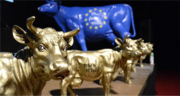
A golden cow for golden values
As conference host, France invited all important stakeholders to celebrate the amazing commitment of farmers, taking this opportunity to reward those who have contributed to making agriculture fairer and more socially sustainable. This year, the "Justine en Or" or Golden Faironika was awarded to:
- Sieta van Keimpema in the “Committed member” category. Kjartan Poulsen, EMB President, acknowledged van Keimpema’s many years of dedicated work for EMB, making a contribution towards international recognition of the European umbrella organisation. "Sieta van Keimpema is a true fighter with an unwavering commitment to defending European farmers. Without her, the EMB as we know it wouldn’t exist."
- In the “Politics” category, MEP Éric Andrieu was honoured for his commitment to improving framework conditions in the dairy sector. "Éric Andrieu and his team took the lead during the last CAP reform in ensuring that important aspects were included in the EU's Common Market Organisation", added French EMB Executive Committee member Boris Gondouin.
- In the "Organisation" category, the Golden Faironika was awarded to the Danish milk producer association LDM (Landsforeningen af Danske Mælkeproducenter), represented by Christen Sievertsen, who developed a key concept for recruiting new members which enabled the organisation to win over further supporters from the ranks of dairy farmers.
- Richard Blanc received the Golden Faironika in the category "Farmer and committed member" as a recognition for his unwavering optimism. He took up the reins as the first president and set this great project on its way.
- Daniel Couhaillat received the prize in the same category. He has been a comrade-in-arms from the very beginning and travelled right across France from his homeland in the southwest to convince German farmers to join the milk strikes. Subsequently, he has assumed a leading position within FaireFrance.
- Kenny Romano was honoured in the "Committed member" category. He acts in the background with incredible efficiency, becoming a well-known and respected leading figure.
- In the same category, Justine Leleux received the Golden Faironika for the exceptional and wonderful work she does for FaireFrance. A big thanks to her.
- In the "Partner" category, the Golden Faironika was given to Laurence Soutif. She is the key contact person at the French dairy LSDH and provided advice and support while the brand was being created.
- The prize in the "Partner" category was also awarded to Eric Rovello. Convinced of the success of the brand, he made it possible for the FaireFrance product range to expand.
- Alain Quouillault was honoured in the "Retail" category. He believed in the FaireFrance products from day one and sold them in his Leclerc store in Argentan. As a result, he has led the sales statistics for Fair Milk products for five years.
- The other laureate in the "Retail" category was Michel Biero, a true lover of agriculture. He didn’t have to think twice when asked to sell FaireFrance products. His LIDL store is one of the most important buyers of Fair Milk products.
- Last but not least, the renowned journalist Vincent Fichmann received the prize in the “Journalism” category. He took the time needed to understand what it’s all about, producing reports of amazing sincerity.
For Kjartan Poulsen, this award has a special meaning. "The prize winners have paved the way for more fairness, driving and supporting this process. The award makes their commitment more visible and comes with a big 'thank you' from us all.”
In addition to the Fair Milk projects in different countries, the ten-year anniversary of FaireFrance’s “Lait équitable” is another good reason for us all to raise our milk glasses and make a toast. “This project means a great deal to everyone involved. It is an amazing adventure that we first began ten years ago. We are pleased to see how popular the brand is among consumers: we are very proud of this achievement and of what we producers have been able to build together with consumers”, says Jean-Luc Pruvot.
FaireFrance crowned this special day with an additional surprise. Milk is a unique foodstuff that is known to lend itself to various incredibly delicious combinations. “It wouldn’t be a ten-year celebration without some chocolate”, says Jean-Luc Pruvot with a twinkle in his eye as he introduces the latest product from the French farmers’ brand: a delicious chocolate milk will now join the range of products offered by FaireFrance.
The EMB congratulates FaireFrance and all the Fair Milk projects for successfully building this unique, socially sustainable brand. And Kjartan Poulsen knows that everyone will be looking out for fair, high-quality Fair Milk products while doing their shopping in their respective countries. "These brands are special because they are a direct link between consumers and farmers, and ensure a fair deal for both parties", says the EMB President.
Joint press release by the European Milk Board and FaireFrance of 12 October 2023
Spanish law: paying above the cost of production
-
- © Pixabay: Peggy_Marco
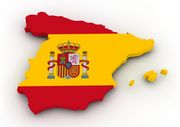
In 2021, Spanish law makers introduced a novelty to stop the destruction of value in the food chain. The Spanish agricultural organisation COAG (Coordinadora de Organizaciones de Agricultores y Ganaderos) gives us an overview.
Read more...German Ministry of Food and Agriculture aims to support dairy farmers - first step in the right direction
-
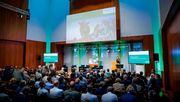
- © AbL
The Federal Ministry of Food and Agriculture (BMEL) organised a conference on the “Future of dairy farming in Germany” on 31 August in Berlin. In addition to the BDM, the AbL also participated in this conference and provides their evaluation of the event, which they believe expressed support for dairy farming.
Read more...Future of dairy farming in Germany: challenges and opportunities in focus at Berlin conference
-
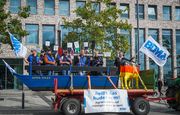
- © BDM
The conference organised by the Federal Ministry for Food and Agriculture on 31 August in Berlin concluded with the first indications from the ministry in favour of strengthening dairy farming. The BDM engaged actively in discussions with representatives from the dairy industry, research, NGOs, trade and with farmers themselves. We also expressed our criticism of agricultural policy to date with an action in front of the conference venue, and presented our expectations of this conference by publishing an eight-point position paper.
Read more...Crisis in the Alps: Swiss dairy farmers fight for survival and fairness
-
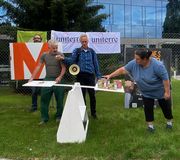
- © Uniterre
Things are far from idyllic in the Swiss alps! Producers continue to struggle and their numbers keep dwindling. In 2022, some 300 dairy farms definitively shut their doors. There are only 17,600 farms still hanging on – we would not have dared imagine this figure ten years ago, so it is safe to say that we are facing hard times.
Read more...The Lithuanian dairy sector faces mounting challenges
-
- © LPGA
The situation for milk farmers in Lithuania continues to deteriorate. Over the past year, the Lithuanian dairy sector has witnessed a worrying decline, notably a reduction of 7,500 dairy cows, equating to a 3.3% decrease. At the same time, the number of operational dairy farms saw a steep drop of 11%, totalling a loss of 2,500 farms. This downward trend has continued with a 2.5% drop in milk deliveries. Worse still, despite this drop in milk deliveries, there has been no corresponding increase in milk prices. To draw a comparison: the current milk purchasing price is about 30% lower than it was in 2022. From January to August 2023, the income of milk producers in Lithuania was a staggering 120 million euros lower than during the same period of last year.
Read more....Reduction in milk price: the gap between costs and producer income is growing yet again
-
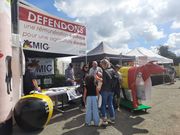
- © MIG
A fair milk price for producers is one that covers all their production costs, offers them decent pay for the work done and ensures that they can put aside savings. It is plain to see that the milk price in 2023 is not fair.
Read more...The growing wolf population in Denmark: challenges and responses
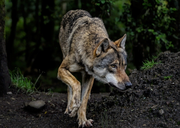
Denmark's wolf population has recently reached unprecedented numbers, shifting the balance in the country's ecosystem. For decades, the fox was Denmark's largest predator. However, in recent years, packs of wolves have firmly established their territories, both inside and outside the designated wolf areas in the western regions.
Read more...Legal notice
European Milk Board asbl
Rue de la Loi 155
B-1040 Bruxelles
Tel: +32 2808 1935
Fax: +32 2808 8265
E-Mail: office@europeanmilkboard.org
Website: http://www.europeanmilkboard.org