
Newsletter as PDF
Contact
EMB - European Milk Board asbl
Rue de la Loi 155
B-1040 Bruxelles
Tel.: +32 - 2808 - 1935
Fax: +32 - 2808 - 8265
Dear dairy farmers, dear interested parties,

Latvia’s fields have been under water for weeks. Some regions have seen four times the usual rainfall, which has left soils saturated, agricultural machinery stranded and forage quality falling. It is a stark reminder that volatile climatic conditions are no longer an exception – they are rather the new normal state that farmers must work with. For many family farms, a season like this year’s eats through their reserves and threatens next year’s yields, too.
But the weather is only half the story. It is the market framework that determines whether a bad season turns into an existential crisis: whether contracts take account of real costs, whether prices can cover these costs, and whether Europe’s rules protect producers in general and when shocks hit in particular. That is why the ongoing reform of the Common Market Organisation (CMO) matters so much. It won’t solve all problems overnight and will not be enough – but if the European Commission holds the line, it can deliver meaningful gains for farmers across the EU.
A position that must not be watered down
Over the past year, the EMB has taken our demands to Brussels and advocated for change on the streets, in open letters and in meetings with EU institutions – spelling out reforms that enshrine fair, cost-covering incomes in market rules. The centrepiece is simple: the conclusion of mandatory, enforceable supply contracts before delivery that set volume, price, quality and term, with no exemptions for cooperatives, and the guarantee of cost-covering prices. Anything less leaves farmers as price-takers and codifies the imbalance we live with today. This is precisely where pressure is strongest to dilute the reform. We see attempts to carve out loopholes, to sidestep obligations via processor cooperatives, to keep contract terms vague enough for power to stay with processors and retailers. The Commission needs to stand firm against such amendments.
Fair prices
Contracts only work if they are based on real production costs and backed by crisis tools. The Agri-Food Chain Observatory (AFCO) and independent cost studies must establish transparent baselines that serve as a reference for supply contracts. When markets swing, a permanent Market Responsibility Programme (MRP) should kick in, with EU-wide supply reductions and financial compensation for farmers. To stop unfair competition, the EU must ban purchases below verified costs and apply mirror clauses to make sure that imports meet our standards.
Who speaks for whom
Some organisations styling themselves as the farmers’ voice argue against mandatory contracts and temporary supply reduction – positions that rather echo processor and retailer interests. Representing producer interests must mean to defend producer incomes, not to dilute reforms.
We cannot control the weather, but we can control the rules. With real contracts, genuine transparency and effective crisis tools, a difficult season like the one Latvia is currently experiencing becomes manageable – which means that family farms can survive, and Europe’s food sovereignty is guaranteed.
The EMB works on our behalf to defend this position. Let’s get this reform over the line without compromising on our demands.
Guntis Gūtmanis, member of the EMB Executive Committee
European Parliament strengthens producers’ interests
-

- © Pixabay: Wolkenkrieger
This week, with its plenary vote, the European Parliament sent a signal in support of Europe’s farmers. A majority of Members of the European Parliament (MEPs) voted against harmful amendments pushed by representatives of industrial interests and in favour of a progressive report that continues to pursue the goal of strengthening producers’ position in the food supply chain: a first important step towards fairer markets.
Read more...Agriculture Committee of the European Parliament adopts position on strengthening farmers in the food supply chain
-

- © EMB
On 8 September, the Agriculture Committee of the European Parliament adopted the Committee report on strengthening the position of producers in the food supply chain. While the decision means some progress, all in all, it nonetheless falls far short of what would be required for a real improvement in the situation of farmers. This is an important step, but not a breakthrough.
Read more...MEPs vote in favour of fairer agricultural markets and prices
-
- © AbL
In early September, the Agriculture Committee of the European Parliament adopted a draft opinion on the proposals tabled by the European Commission to amend the Common Market Organisation (CMO). The German family farmers’ association AbL especially welcomes the proposed changes to rules that require mandatory written contracts as they would strengthen the position of farmers in negotiations for fair producer prices.
Read more...EMB: “No to the sell-out of agriculture!”
-

- © ec.europa.eu
On 4 September 2025, the European Milk Board took part in a large protest in Brussels, where numerous organisations from the agricultural, environmental and development sectors jointly expressed their opposition to the planned trade agreement between the EU and the Mercosur countries. For the EMB, it is clear that the Mercosur agreement unilaterally serves the interests of large trade and industrial groups – with serious consequences for European agriculture, the environment and food security.
Read more...From compulsory grazing to CAP reform: issues faced by dairy farmers
-
- © Kunstwerk Media
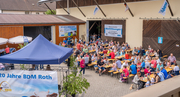
This summer, the German dairy farmers’ association BDM celebrated its 20-year anniversary with summer fests and dairy farmer evenings. Two key events took place in September: the Fair Milk Conference in Dortmund and the Agriculture Ministers Conference in Heidelberg. We are currently gearing up for our symposium, which will be held on 7-8 November in Arnstadt near Erfurt – for the first time outside of the International Green Week. Against this backdrop, setting the political agenda comes strongly into focus.
Since the beginning of the year, Germany has had to implement compulsory grazing for dairy cows as stipulated in the EU regulation on organic production. For a sizeable proportion of organic producers, this would mean giving up organic milk production. This is something we pointed out at the beginning of the year and BDM board member Manfred Gilch also raised awareness about this issue with European Commissioner for Agriculture Christophe Hansen in a discussion during the International Green Week. Another opportunity to speak to the Commissioner now presented itself during an event in Bavaria.
Christophe Hansen asked Manfred Gilch of his own accord whether the issues faced by many organic dairy farmers stemming from compulsory grazing had been solved. Following a negative answer, the Commissioner for Agriculture provided clear assurances that this matter would be addressed at EU level and that the EU regulation on organic production would be reopened or reworked over the course of the year. Manfred Gilch also brought up the urgent need to act on the Common Market Organisation (CMO).
The current ideas of the Von der Leyen Commission on the Multiannual Financial Framework and the Common Agricultural Policy have not been particularly well received. The projected funding of 2 trillion euros required between 2028 and 2034 was immediately rejected by the financial heavyweights among the Member States. At the same time, the European Parliament is wary of potentially losing its influence if the position of the Commission and the Member States were to be strengthened.
When it comes to CAP proposals, things are not much better: While some warn of cuts in payments from the first pillar, others reject the transfer of funds from the second pillar to national competence. However, many agree with the assessment that the CAP proposals will result in an unprecedented need for coordination as well as systematic uncertainty. In any case, discussions in Brussels are far from over. Let’s not forget that EU Heads of State and Government were only able to agree on the current Multiannual Financial Framework in 2020 after a summit that lasted four days and four nights. The proposals unfortunately do not say much about the long overdue restructuring of the entire CAP and the CMO.
Bundesverband Deutscher Milchviehhalter e.V. (BDM)
European Fair Milk Conference 2025: For fair milk prices across Europe + 15-year anniversary of “Die faire Milch” in Germany
-

- © EMB
“Die faire Milch” Germany and Boris Gondouin in charge of Fair Milk at the European Milk Board opened this year’s European Fair Milk Conference in Dortmund with a warm welcome. It was a cordial reunion of friends and partners who jointly emphasised the importance of farmers mutually strengthening each other in Europe: “Today, we are celebrating not only Fair Milk, but also our cohesion without which there can’t be any future for our farms”, says Boris Gondouin.
Read more...The market exists – you just have to find it
-
- © Dorothee Biermann
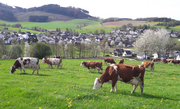
From the outside, it looks like things are calm on the dairy market. But a closer look reveals that milk standards are unravelling and leading to greater price opacity. Modules, bonuses and animal welfare levels are distorting the concept of base price. Where is the market for producers, and how can they ensure a fair share for themselves?
Read more...The main issue of the Swiss dairy market remains unsolved
-
- © Pixabay:fil magic
The Swiss dairy market is plagued by uncertainty: cheese exports are expected to drop due to the tariffs imposed by the United States. What do we do with the milk that we will no longer be able to sell in this way? BIG-M is highly concerned about the interbranch organisation’s decision to offload these milk volumes abroad in the form of butter.
Read more...Denmark’s 80-day Bovaer® mandate: first farm results and road to 2030
-
- © Vanessa Langer
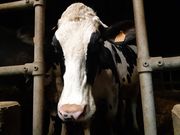
Denmark has introduced mandatory feed-based measures for larger dairy herds in order to curb climate emissions from cows. Turning policy into practice is a real-world test – technically speaking, in rations and routines, and politically across the sector as costs, logistics and acceptance are widely debated.
Read more...Irish farming at a crossroads
-

- © Paul Symth, ICMSA
Autumn 2025 finds Ireland’s farmers in an unusual position. For much of the past year, conditions like weather and prices have been favourable. And yet a shadow looms over the industry. The uncertainty stems not from the present, but from questions about the sector’s long-term future.
Read more...Legal notice
European Milk Board asbl
Rue de la Loi 155
B-1040 Bruxelles
Tel: +32 2808 1935
Fax: +32 2808 8265
E-Mail: office@europeanmilkboard.org
Website: http://www.europeanmilkboard.org