
Newsletter as PDF
Contact
EMB - European Milk Board asbl
Rue de la Loi 155
B-1040 Bruxelles
Tel.: +32 - 2808 - 1935
Fax: +32 - 2808 - 8265
Dear dairy farmers, dear interested parties,

It seems like the world is going to hell in a handbasket! I have been a farmer since the age of 14, and I feel like most of our world leaders have gotten crazier, more oblivious and more irresponsible! Agriculture is my passion, as it is for my fellow combatants and comrades. We mobilise to strengthen producer power upstream and marketing practices downstream with Fair Milk (such as FaireFrance in France), so that a maximum number of farms make it to tomorrow, in all regions. And yes, we must remain because our profession is indispensable to life itself. We are at the heart of everyone’s health and well-being, we nourish life by ensuring three meals a day. And we also strive to shape our environment, our landscapes - in essence, our living space that perhaps we take too much for granted as we constantly inhabit it. All this to say that our profession is everywhere in daily life, and too many forget that, starting with our decision-makers.
We as citizens shoulder a massive responsibility, but when our leaders’ decisions are so far-removed from the reality on the ground, things become complicated, especially when citizens stop speaking up! We need to get out of this resigned state and recentre discussions on the lived reality of farmers and the threats to our food supply!
I am part of a European organisation called the European Milk Board (EMB) that was created to advocate for decent remuneration of European producers so that they will still be around tomorrow. To this aim, we constantly put forth policy proposals like supply regulation (Market Responsibility Programme, MRP) to obtain prices that cover production costs (this is even done in the oil sector as well when prices are too low): we haven’t invented anything new! A production surplus of just a few percent compared to consumption and prices plummet. The EMB also produces calculations of real production costs for all producers because the so-called majority organisations (often linked to large farmers’ unions) are completely disconnected and act more like certain journalists who have also lost the plot! You have to be competitive, so they invent figures that give this impression, except that on the ground everyone is suffocating and ends up throwing in the towel!
Our organisation is constantly lobbying to explain that we need to strengthen the position of farmers, and we need to stop treating them like an adjustment variable! Our decision-makers are fine with the low prices we receive because it allows consumers to eat for cheap, but mainly because the intermediate stages of the value chain comfortably profit off the fruits of our hard labour. But this isn’t sustainable over time.
And there’s another massive downside! A robust agricultural sector is also synonymous with, first and foremost, food security and our self-sufficiency in terms of a healthy diet, our ability to respect and shape the environment we live in and to avoid the increasing number of fires across France and even in northern Europe due to lack of maintenance and natural firebreaks! Canadairs can try to put out fires but grazing, the natural maintenance of pastures by our cows, sheep, goats and other animals, avoids blazes in the first place! And please don’t tell me that it’s impossible to revive these agricultural sectors because lamb mainly comes from very far away! We seem to have lost common sense, and everything is out of whack. Consuming local is not a priority anymore. We are fighting tirelessly to ensure that our leaders enforce common-sense rules to reinstate this balance, to force everyone to understand that food is about more than just short-term survival! If we become dependent on others for our food, we will not only see more homes burnt to the ground – we will see prices, quality and food availability suffer significantly.
Neither a few subsidies nor some payments (including from the CAP) will solve things! What we need is a true political vision for us farmers, but for you consumers as well. We need a radical, rapid implementation of tools and laws like a ban on sale below production costs and production regulation! The collusion between our cooperatives, farmers’ unions and professional agricultural organisations must be challenged and eradicated – it is a gangrene that has done nothing but deteriorate relations between us all. Just a few producer organisations, structured across agricultural sectors and not vertically, negotiating prices should be the norm if we are to stop farmers from competing against each other.
If the prices for our foodstuffs and especially for milk were to always cover our production costs, we could easily survive a year of drought or bad weather. We are still waiting for our leaders to be willing to take up real production cost calculations, which include a safety margin for such eventualities.
And finally, our policy-makers should oblige retailers to promote less processed and especially fair products where the farmer has the final word.
What I have just described should be the norm and should constitute the foundation for our governments’ work. We remain at the ready to help them achieve it!
To end with a quote:
When things are good, everything goes well.
When agriculture suffers, the end is in sight.
Or as Thomas Jefferson put it in a letter to George Washington on 14 August 1787: “Agriculture is our wisest pursuit, because it will in the end contribute most to real wealth, good morals, and happiness.”
Boris Gondouin, EMB Vice President and active member of FaireFrance Fair Milk
Making the EU dairy market fit for the future: the right rules are needed
-

- © EMB
The European dairy market needs a framework that prevents crises and enables dairy farmers to earn an adequate income. In the view of the European Milk Board (EMB), the EU currently has a crucial opportunity: with the revision of the Directive on Unfair Trading Practices (UTP), the further development of the Common Market Organisation (CMO) and the discussion on future crisis instruments, several important policy areas are on the table at the same time. The UTP reform, the CMO and effective crisis instruments must ensure that a functioning dairy market provides the basis for cost-covering producer prices.
Read more...AbL: “Contracts aren’t a silver bullet but there’s no way around them.”
-
- © AbL
The position of producers must be strengthened in the agricultural value chain. This is something that the European Commission, some EU Member States and MEPs across party lines have long recognised, and an EU regulation on contract conditions has been adopted. Now comes national implementation and Germany has opted for a consultation process to negotiate the roll-out. The Federal Ministry of Agriculture (BMLEH), who abstained in this vote, is spearheading the process.
Read more...Switzerland: supply management on the dairy market is indispensable!
-
- © Pixabay: fil magic
Representatives from farmers’ organisations Uniterre, BIG-M, Bäuerliches Zentrum Schweiz, Berner Bäuerliches Komitee and Révolte agricole suisse romande met on 19 May in Schönbühl to talk about their concerns regarding the current milk crisis. Two clear demands emerged from this exchange: one is aimed at the Federation of Swiss Milk Producers (FPSL) and the other at the Directorate of Customs.
Read more...15 years of FAIRMËLLECH - a brand led by farmers
-
- © Fairkoperativ
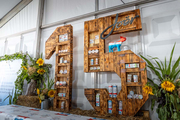
Since 2011, milk producers in Luxembourg have taken sales into their own hands with FAIRMËLLECH. On the occasion of the 15-year anniversary, it’s worth looking back to see how a response to the milk crisis led to a cooperative model that has left its mark beyond the dairy sector.
Read more...Switzerland: Open letter for fair milk prices in Migros!
-
- © Uniterre
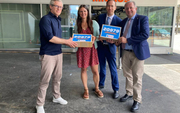
On 1 June, an open letter calling for fair milk prices was submitted by the Association for the Promotion of Fair Milk to Migros in Bern. 20,979 people have signed this letter and have sent a clear message: Swiss milk deserves a price that permits our farmers to make a living.
Read more...Denmark: Bovaer® remains mandatory for 80 days per year
-
- © Vanessa Langer
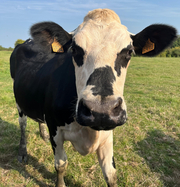
Despite the ongoing re-evaluation of Bovaer® initiated by the European Food Safety Authority (EFSA), Bovaer® – a feed additive used to reduce methane emissions in ruminants – Danish politicians have decided that its use will remain mandatory for dairy farmers.
In late autumn 2025, more than 400 out of 650 responses from Danish dairy farmers reported problems following the use of Bovaer®. These included drowsiness, reduced feed intake, less rumination, higher somatic cell counts (SCCs), more cases of mastitis, elevated milk fat levels and, in some cases, the death of cows or increased culling rates. All of these reports point to reduced animal welfare.
The EFSA is currently re-evaluating Bovaer®. Dairy farmers had expected this process to result in the suspension of the mandatory use of the additive in 2026, but this has not happened. The requirement to use Bovaer® for 80 days per year continues to apply to Danish herds with at least 50 conventionally fed cows. However, an exemption remains available: farmers may stop using Bovaer® if they submit a declaration stating that feeding it compromises their cows’ health or welfare.
The National Association of Danish Milk Producers (Landsforeningen af Danske Mælkeproducenter, LDM) considers it unreasonable to tax natural processes that recycle nature’s carbon without increasing the climate impact. The LDM argues that natural digestive processes cannot be replaced by renewable electricity (which is exempt from carbon taxation), do not consume fossil energy and do not increase the concentration of greenhouse gases in the atmosphere.
The LDM is campaigning to ensure that animal welfare takes priority over potential environmental or climate benefits. A reasonable balance must be found.
New nitrogen law prompts demonstrations outside Parliament
On 1 September, many Danish farmers drove their tractors to the Parliament building in Copenhagen – an unusual sight in Denmark. Many others travelled by bus from across the country. They warned politicians that the new nitrogen law, which was rushed through Parliament in a matter of weeks, will in practice cost jobs across rural areas, affecting farmers, mechanics, milking-machine technicians, abattoir workers and others.
The new law significantly reduces nitrogen allowances at field level to address oxygen depletion and eutrophication in Denmark’s inland waters. Farmers are willing to make changes, but the timing creates serious problems: the law is taking effect after farmers submitted their fertiliser plans and sowed winter crops without knowing the final requirements. The Danish Parliament passed the law on 3 September. Meanwhile, two university professors have suggested that aspects of the law might be unconstitutional.
Taken together, the mandatory use of Bovaer® and the new nitrogen law show the consequences of introducing climate and environmental measures without sufficient regard for animal welfare, farm planning and rural livelihoods. Danish farmers accept the need for environmental action, but measures must be based on sound evidence, introduced on a workable timeline and developed with the people who must implement them. Such policies will only earn farmers’ trust if they protect animals, allow farms to remain viable and give producers a genuine voice in the decisions affecting their work.
Lone Vestergaard, Landsforeningen af Danske Mælkeproducenter (LDM)
BDM: Germany’s response to the drought
-
- © BDM
The BDM is critical of the planned top-up of direct payments in 2027 as this is not a sufficiently targeted response to the financial difficulties on farms. Instead of merely shifting agricultural subsidies, the BDM calls for aid that would ensure both short-term liquidity and relieve the market - something akin to voluntary production cuts in exchange for compensation. The association makes sure to defend the interests of dairy farmers in their direct exchanges with policymakers as well.
Read more...Switzerland: drought in the plains, pressure on farms
-
- © BIG-M
The dry weather conditions are distributed unevenly across Switzerland. The situation is dire across the plains. The hills and mountains were relieved by occasional localised thunderstorms. Feed exchanges were set up in different cantons: Who needs feed? Who has feed to give? The most important measure, however, was procuring feed through imports, mainly from Italy.
Legal notice
European Milk Board asbl
Rue de la Loi 155
B-1040 Bruxelles
Tel: +32 2808 1935
Fax: +32 2808 8265
E-Mail: office@europeanmilkboard.org
Website: http://www.europeanmilkboard.org